Home

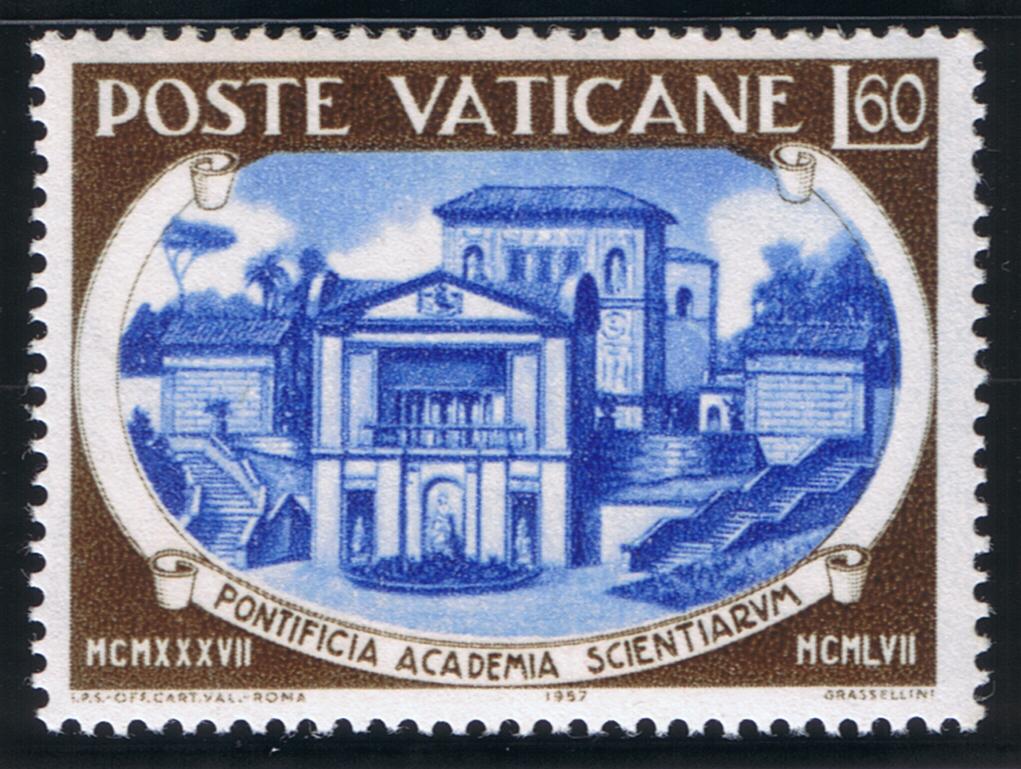
The Pontifical Academy of Science, in its present form, is of recent origin, but it traces its tradition back to 1603 when there was established in Rome by Federico Cesi, together with three other twenty-year-old men, the first scientific academy in the modern world. With interests in mineralogy, astronomy, zoology, and botany, it aimed at both the discovery and dissemination of knowledge. They called themselves the "Lincei", those having the penetrating eye of the lynx. Galileo Galilei was a member. But with the death of Cesi, the academy went downhill and activity ceased in 1651. An attempt at revival was made by Francesco Caetani in 1801, called the " Nuovi Lincei ". The papacy had always supported the society and in 1847 Pius IX established it as " The Pontifical Academy of the Nuovi Lincei " in the Campidoglio. Under papal auspices, it flourished until the new Italian government seized its library and archives, after which times its operations were slight for many years. Benedict XV decided to revive the academy and appointed Fr. Giuseppi Gianfranceschi as its new president, with the intent of a complete reform and modernization of the academy, but death overtook the Pope. Pius XI confirmed the work and on the death of Fr. Gianfranceschi, called the founder and rector of the Catholic University of Milan, Fr. Agostino Gemelli, to be its head. In early 1936 Pius XI stated the purpose of the Academy as " not to honor Catholics, but dedicated to science as a font of truth and therefore a means of liberation from evil. " Its new title was " The Pontifical Academy of Sciences ". " Study Week " brings together scientists to discuss difficulties and to iron out problems on a specific subject, in order to expedite progress in that field. World War II interrupted the work of the Academy but it was resumed with peace. Study week of 1949 brought together experts on cancer. Study week of 1951 saw geophysicists studying the localization of the position of oceanic cyclones. In 1955 the influence of microelements on vegetable and animal life, which can result in increased food crops and curing of functional and organic diseases. Cardinal Pacelli, as Cardinal Legate, officially participated at the inauguration of the Academy in June of 1937 and later as Pope Pius XII supported and encouraged it. The Casino of Pius IV, or Villa Pia, is the meeting place of the Pontifical Academy of Sciences. This is a country house constructed in the Vatican Gardens in a small grove facing the Cortile di Belvedere by Pirro Ligorio (probably born in Naples before 1510, and who died in 1583 ), a man of great learning in architecture, engineering, painting, writing, archeology and antiquity, but who had a bad name among archeologists because of his frequent falsification of inscriptions. His vast knowledge of antiquity is shown in the Villa Pia. Many ancient country villas are indicated as his model, but actually he drew from all of the best of antiquity to design this original conception. Pope Paul IV had begun its construction in May, 1558, but his death halted the work in the same year, and Pius IV resumed it in May 1360. The general work was completed in 1561, and the interior by 1562, but antique materials were added constantly. The purpose of the Casino was to provide the Pope with an easily accessible place of quiet and recreation whether alone or with friends. The Villa Pia is the only secular building in complete preservation from the period of transition from the Renaissance to the Baroque style. It combines architecture, decoration and painting in perfect harmony. The Villa originally consisted of two small buildings, the Casino and the Loggia. These were separated by an oval-shaped court enclosed by a parapet, with seats, and a fountain in the middle. The fountain and its oval basin show two marble figures of putti riding a dolphin, the work of Casignola. The courtyard is paved with white travertino and dark peperino with no regular pattern, and the enclosing wall with but two entrances insures privacy. The decorative art balances the architectural. The facades of both the Casino and Loggia are covered with stucco ornamentation, and columns of gray Numidian granite adorn the entrances of both buildings. The Casino has a mosaic-decorated portico leading to three rooms while on the floor above one finds corresponding rooms. The interior of the Casino is more magnificently decorated than the exterior. The Loggia was used for open-air meals, and had a view of a fish pond and garden. It was decorated interiorly by the same artists as did the Casino. The Villa Pia was a clever combination of house and garden with the appearance of happy informality. Pius IV spent much time there. Pius V dined there frequently, while Pius VIII and Gregory XVI frequently held audiences there. Pope Pius XI enlarged the Villa in 1932, having Giuseppi Momo keep the new construction in harmony with the original buildings. The entrance to the new addition faces the picture gallery, while on the Vatican side there is a private entrance for the pope. The new addition is connected with the rooms on the first floor of the Villa by an arcade. Its setting, amid the quiet of the Vatican Gardens, ideal for meetings of the Academy of Science. Technical Details: Scott Catalogue - 227 - 228 Date Issued - 09 October 1957 Face Value - 35 l, 60 l Perforations - 14 Printer - The Italian State Printing Office |
| (From Vatican Notes Volume IX, Number 4, January-February 1961, Pages 11-12) |