Home


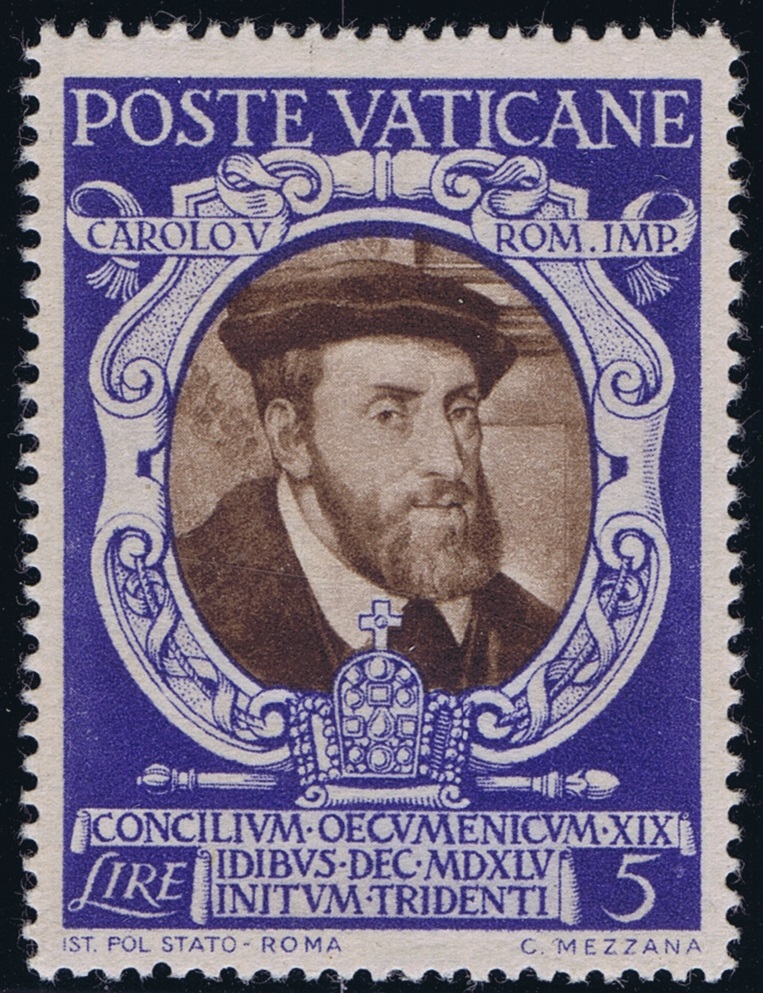
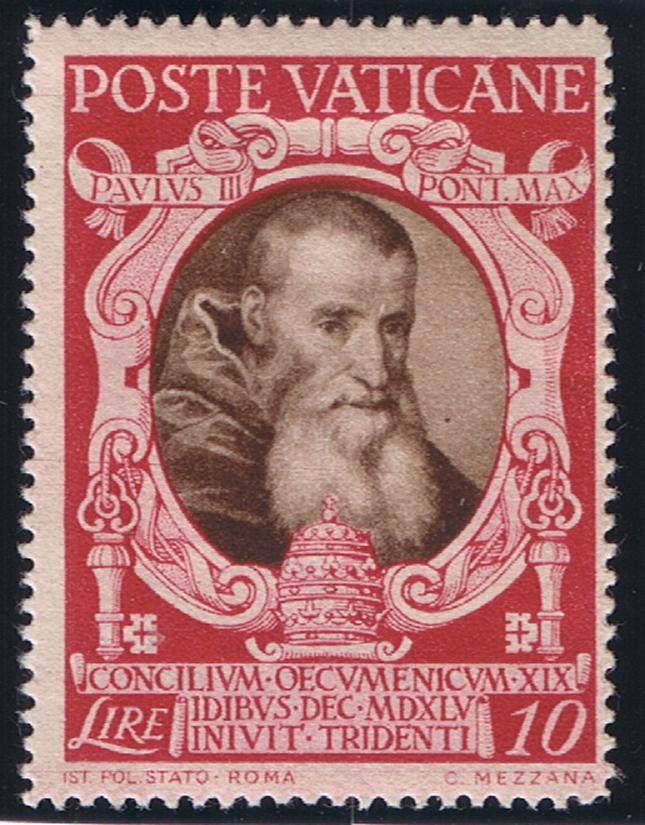
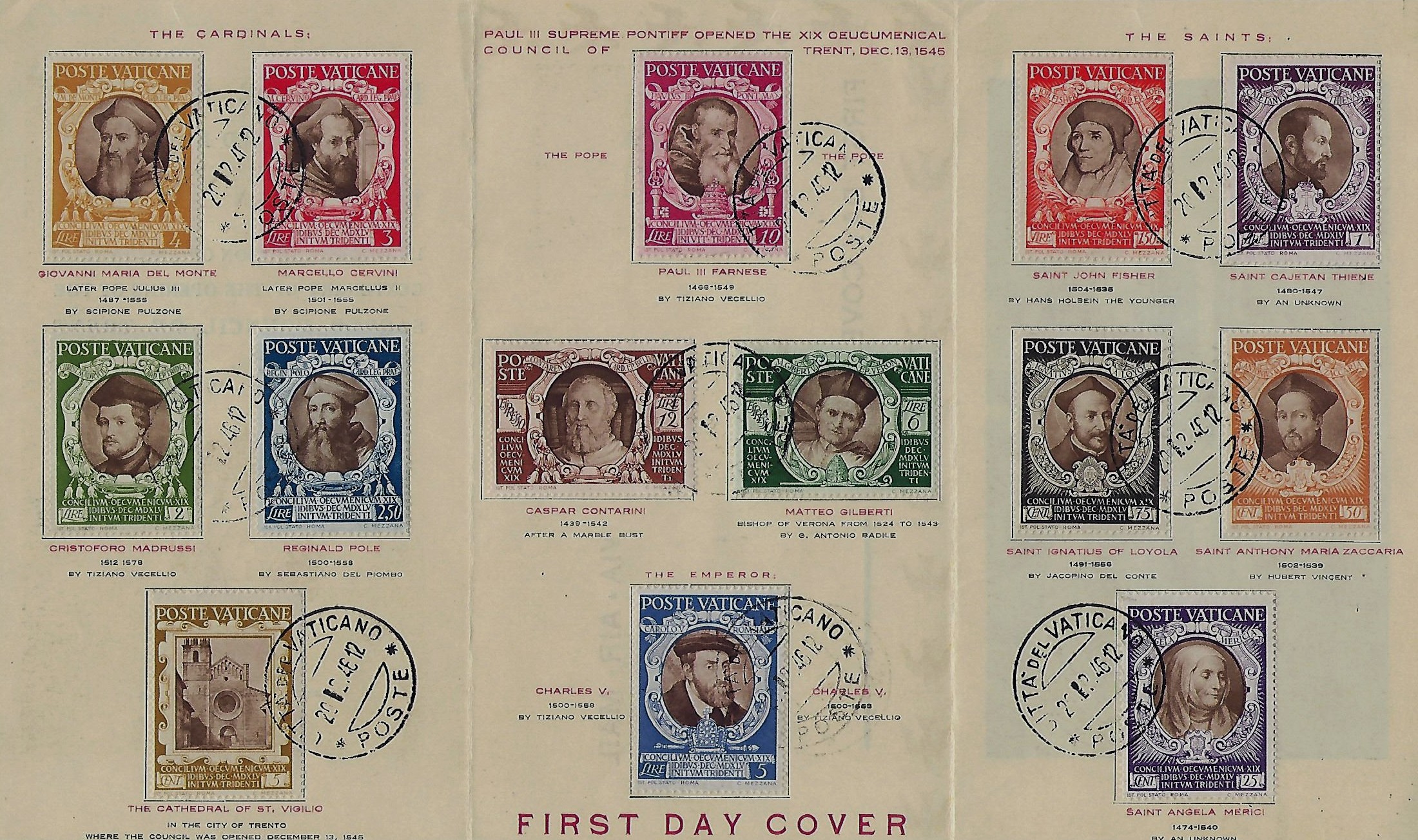
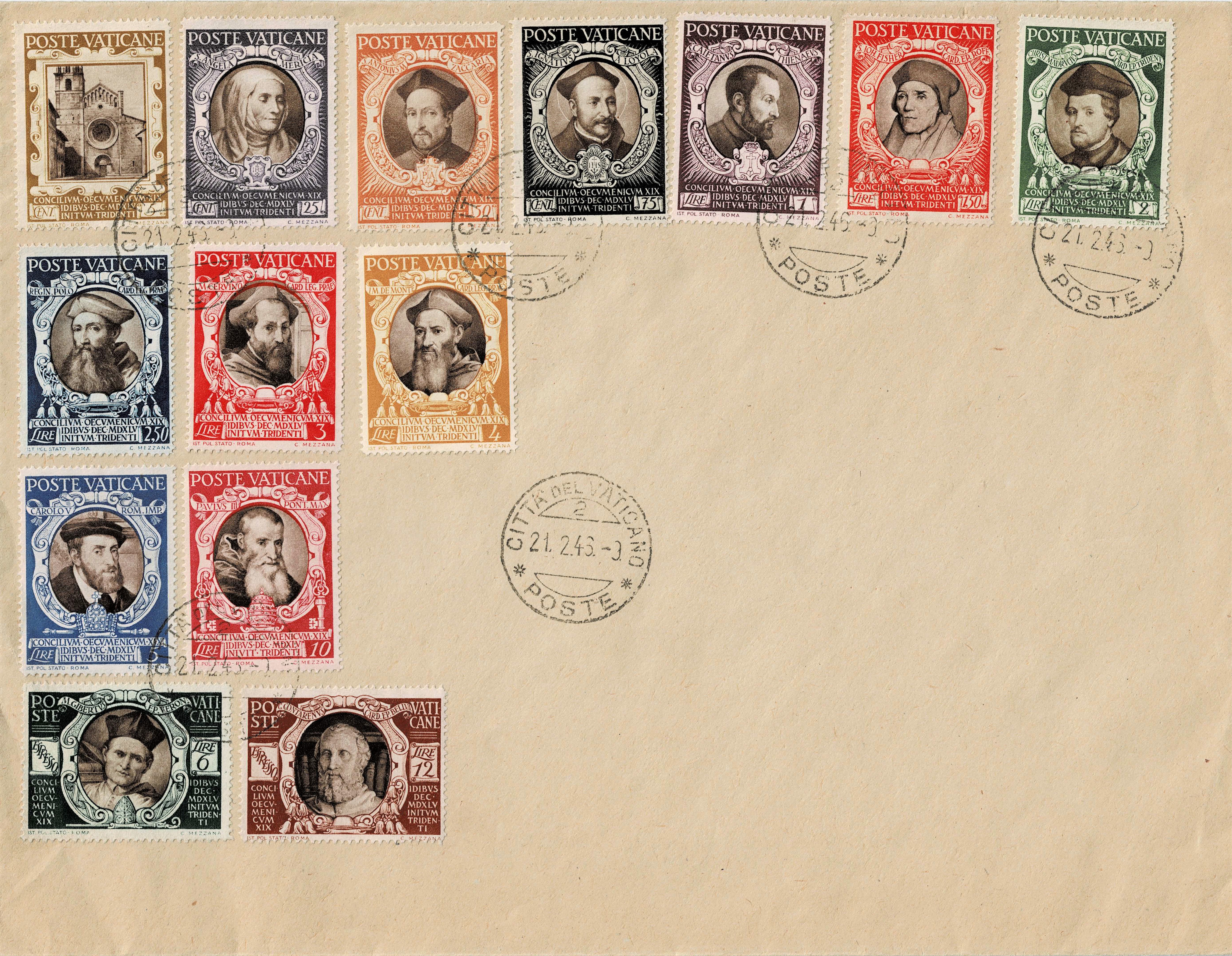
On February 20, 1946, the Vatican released a set of stamps to commemorate the fourth centenary of the Council of Trent. In reality, although this issue had a commemorative theme, it was a new set of definitives to provide values badly needed by the Vatican Postal Administration. The Council of Trent convened on December 13, 1545, by order of Pope Paul III to issue a definitive declaration of the Doctrines of the Church in answer to the Protestant heresies and to reform the inner life of the Church by removing the abuses that had developed in it. The sessions of the council defended and made clear fundamental truths of Christianity including such controversial subjects as: the authority of the Bible, original sin, the Mass, and the Sacraments especially Matrimony and Holy Orders. So complete was the work of this council that it extended for almost a generation, finally coming to an end on December 4, 1563. The influence of the Council of Trent was so great that its effects on the religious and civil life can be traced to modern times. The personalities honored on the stamps of this set are not only those who played an important role in the council, but those who contributed towards its preparation as well. Pope Paul III, Scott 121 Pope Paul III (1468-1549), from the beginning of his Pontificate in October of 1534, vigorously made every effort to bring an end to the difficulties arising on all sides of the Church. In 1535, he convoked the Council of Mantova, to bring about the reform, but it ended in vain. Again he called a council. This time in Vicenza in 1538, but like the Council of Mantova, it was in vain. His third try was successful on May 22, 1542, when he suggested the council convene in Trent. His efforts did not cease with the calling of the Council but continued until the tenth general session at Bologna on June 2, 1547. Two years later he went to his reward. Emperor Charles III, Scott 120 The Council of Trent was called during the reign of Charles V (1500-1558) as Holy Roman Emperor. He met Pope Clement VII in Bologna in 1530, to arrange some form of conciliation with the various factions of Christianity. A satisfactory method was not found until the successor of Clement VII was elected, Pope Paul III. Again he extended his earnest support and cooperation for the preparation and continuation of the Council. The motives for his interest were not religious or because he felt it was his duty to the Church. His main concern was to establish religious peace within his domain.
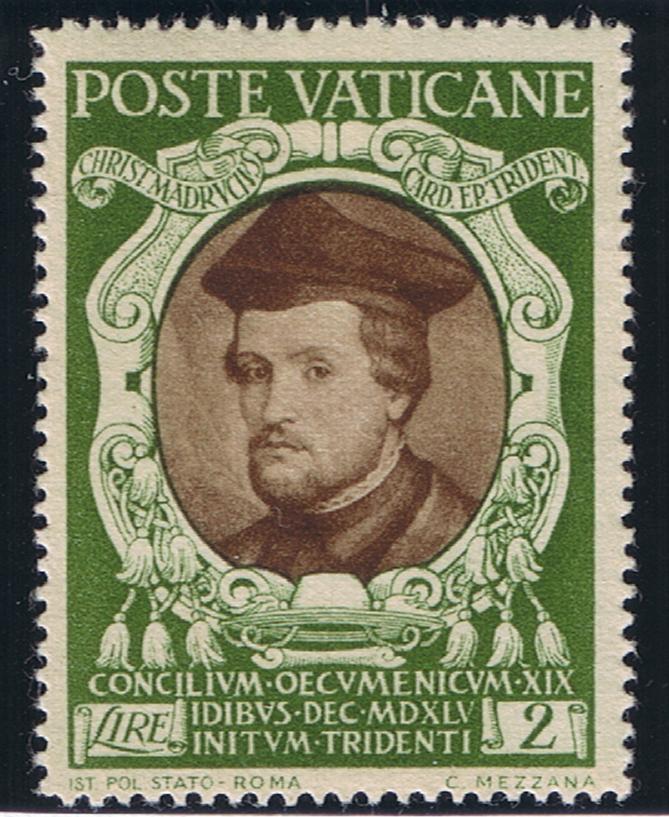
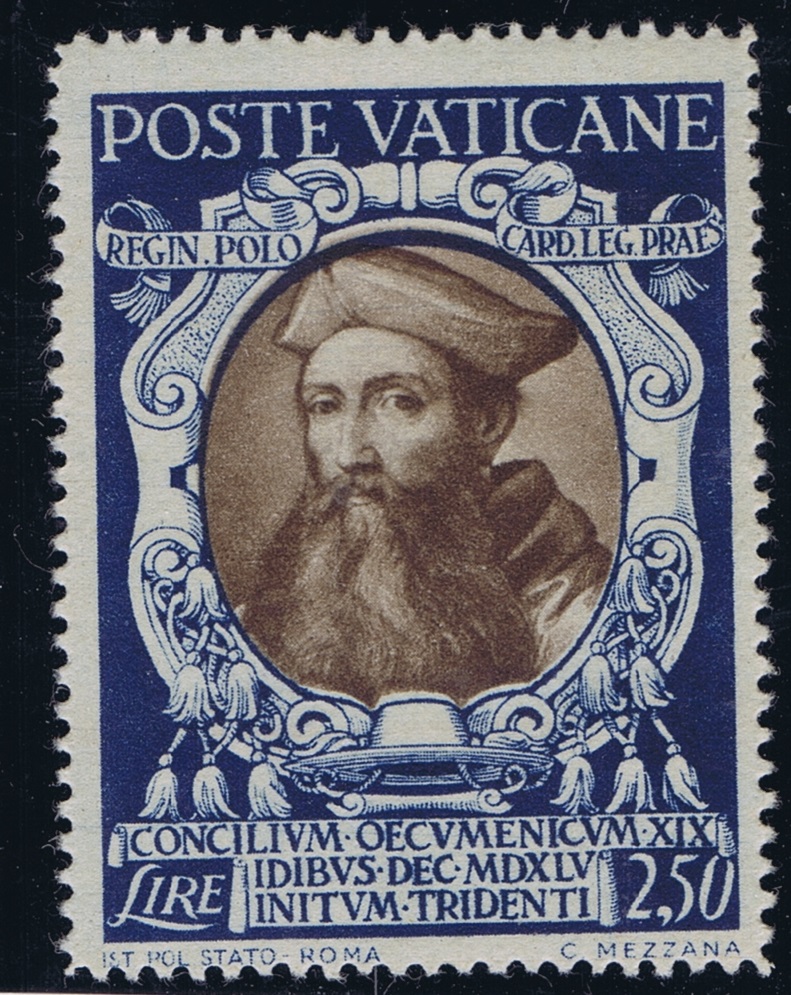
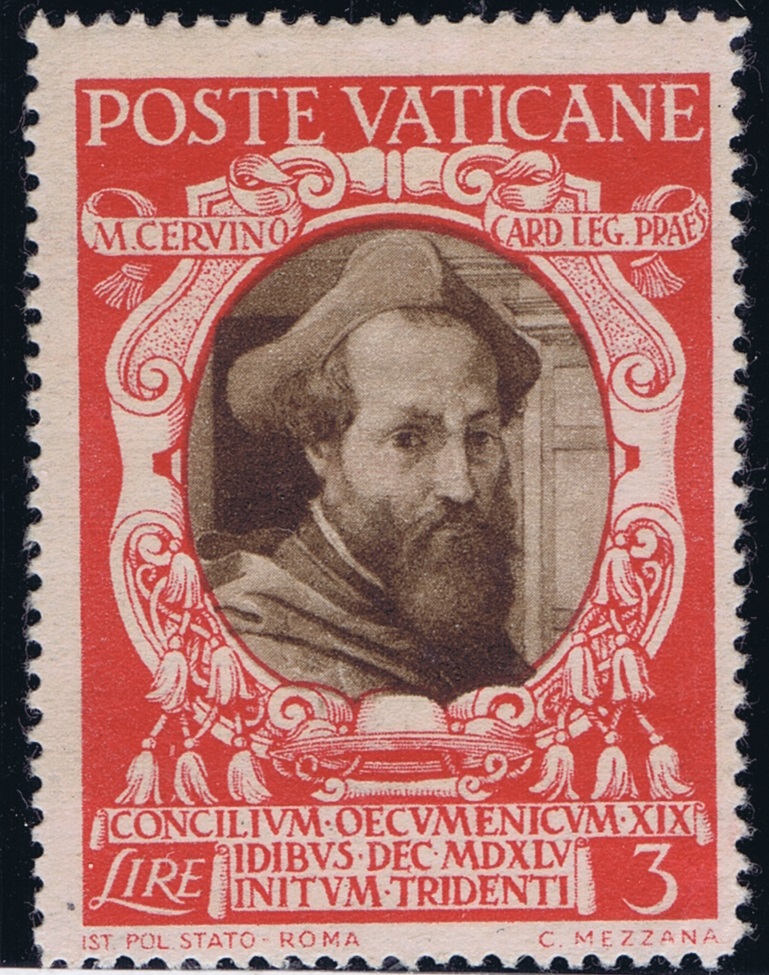
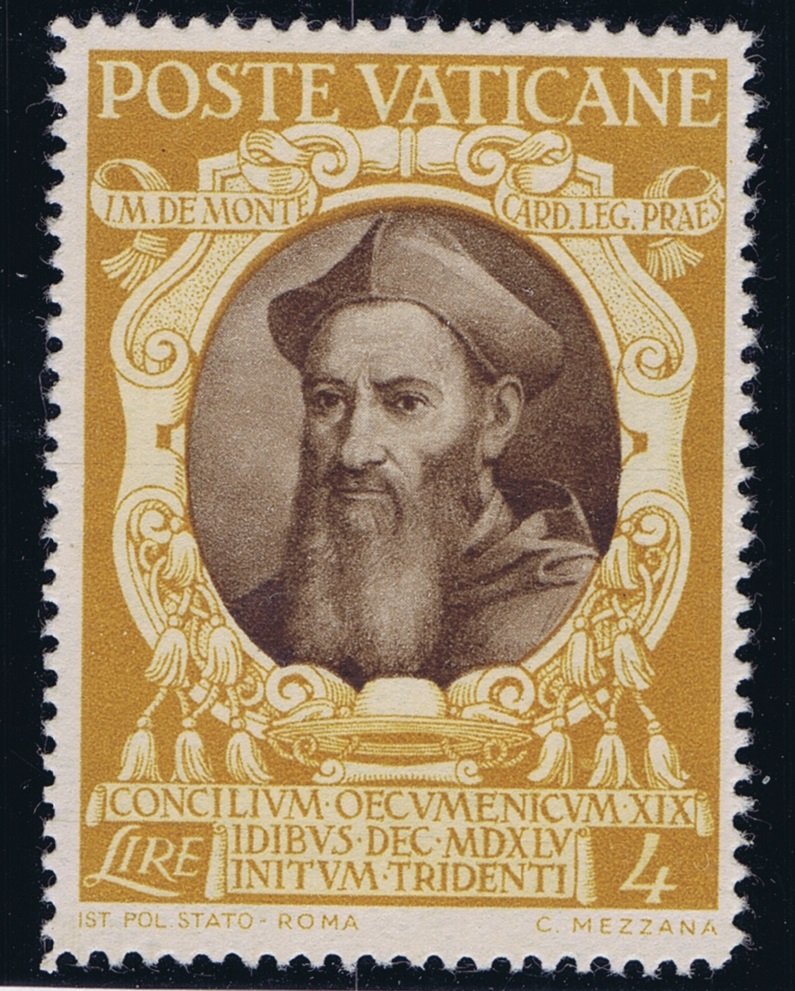
Left: Reginald Cardinal Pole, Scott 117 Center: Marello Cardinal Cervini, Scott 118 Right: Giovanni Maria Del Monte, Scott 119 The next three values of this set portray the Cardinal legates who were the presiding officers at the inauguration of the Council of Trent. Giovanni Maria Del Monte ( 1487-1555 ) attained the Red Hat in 1536. Seven years later he was appointed Bishop of Palestrina and sent to Trent by Pope Paul III. He was elected Supreme Pontiff in 1550, and chose the name of Pope Julius III. A year later he reconvened the Council and continued it until the sixteenth general session that opened April 28, 1552. The second Cardinal Delegate was Marcello Cervini ( 1501-1555 ). This meek and pious prelate of Montepulciano was a famous protector of arts, literature in particular, and a mastermind of the Catholic Reform. He devoted himself to the collection of Codes and in 1539, was elevated to the rank of cardinal. He was given the Basilica of the Holy Cross as his titular church. On April 9, 1555, he was elected to the Papacy as Pope Marcellus II. Twenty-one days later he met his fate giving the Catholic Church one of the shortest Pontificates of its long history. The third Cardinal sent to Trent by Paul III was Reginald Pole (1500-1558). He was the son of a noble lady of the Royal Family of England. He received the Red Hat in 1536, and appointed Archbishop of Canterbury in 1555. Cardinal Pole was of noble mind and bearing stemming from his humanist education and always ready to defend the Holy See. Christoforo Cardinal Madruzzi, Scott 116 Cristoforo Madruzzi (or Madrussi) (1512-1578) presided over the diocese of Trent when the Council was inaugurated. He was elevated to the Cardinalate in 157, as Cardinal priest of Saint Cesario. Saint Vigilio Cathedral, Trent, Scott 110 In addition to the inauguration ceremonies, twenty-three of the twenty-five general sessions of the Council of Trent were held at the Cathedral of Saint Vigilo in the City of Trent. The church has an exterior in severe romance style while the interior is in the shape of a Latin Cross of three naves. It was consecrated in 1146, by the Patriarch of Aquileia, Pellegrin.
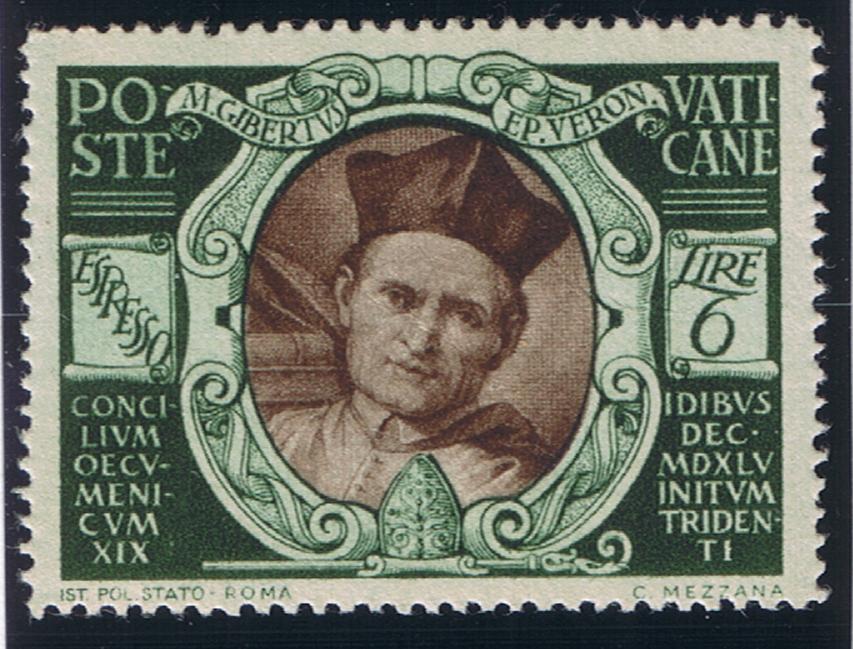
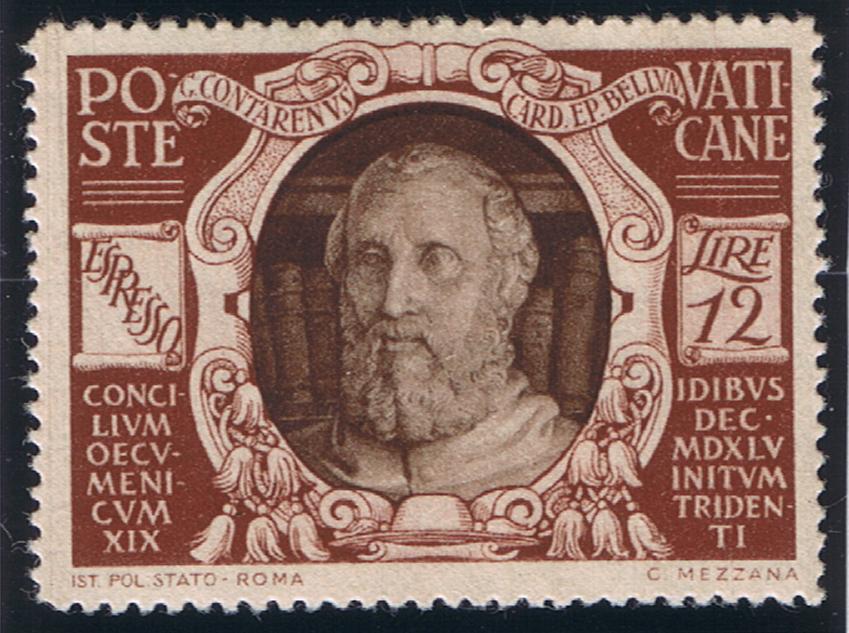
Top Left: Saint Angela Merici, Scott 111 Top Left Center: Saint Anthony Zaccaria, Scott 112 Top Right Center: Saint Ignatius of Loyola, Scott 113 Top Right: Saint Cajetan Thiene, Scott 114 Bottom Left: Saint John Fisher, Scott 115 Bottom Center: Bishop Matteo Giberti, Scott E9 Bottom Right: Gasper Cardinal Contarini, Scott E10 The remaining values of this issue pay tribute to some of the most prominent promoters and defenders of Catholic Reform. Their works were instrumental in bringing about the XIX Oecumenical Council called at Trent. Matteo Cardinal Giberti (1525-1543) was chancellor for Pope Clement VII. He presided as Bishop of Verona, a diocese bordering that of Trent, from 1524 to 1543. His greatest contribution was the creation of the modern care of souls that served as a model for the sessions of the Council of Trent. Gaspare Contarini (1438-1542) was a Venetian nobleman. He was elevated to the rank of Cardinal directly from the lay state in 1535, and served as Bishop of Belluno. He was very broadminded and conciliatory with a great desire for action. He worked untiringly for the reformation and unity and was one of Pope Paul's greatest supporters for the Council. Saint John Fisher (1504-1535) was one of the first and the most influential men who wrote in defense of Catholic Doctrine and unity of the Church. As Cardinal Bishop of Rochester, he continued his efforts for the Reform. Because of his efforts he was attacked and slain becoming one of the first martyrs of the Reform. He was canonized in 1935, along with Thomas More, by Pope Pius XI. Saint Cajetan Thiene of Vicenza (1480-1547) was one of the co-founders of the Theatines, the other being Giampietro Carafa, who became Pope Paul IV. The Theatines were a select group of priests who sent many Bishops to the Council. It also served as a nursery for the reformers spreading the decrees of the Council of Trent. Saint Ignatius of Loyola (1491-1556) was a nobleman and knight who renounced his worldly positions to turn penitent. While attending the University of Paris he persuaded a number of his classmates of noble birth to join with him in forming the Society of Jesus. The society was dedicated to preaching to the infidels and educating and training youth. The society sent such theologians as Salmeron and Lainez to the Council and applied all its efforts to the Reformation's success. Saint Anthony Maria Zaccaria (1502-1539) was born a nobleman of Cremona, and served the poor as a doctor of medicine. With other noblemen of Lombard, he founded the Congregation of the Barnabites, more commonly known as the Society of St. Paul. The Barnabites were dedicated to the education and welfare of youth, the instruction and religious formation of the faithful, the administration of the Sacraments, and proper dress at public worship. Saint Angela Merici (1474-1540) is the only woman portrayed on a stamp of this series . She was known for her piety and acts of charity as well as a promoter of the reform in the Church. St. Angela founded the religious order of the Ursulines, a group of nuns dedicated to the education of young women. The order of the Ursulines was so successful in accomplishing its aims that it spread rapidly throughout the world and is still flourishing to this day. |
| (National Philatelic Museum, Volume VII, Number 1, 1954, pages 61-107) We are grateful to the Cardinal Spellman Philatelic Museum for allowing the Vatican Philatelic Society to use the copyrighted text on our website. |