Home
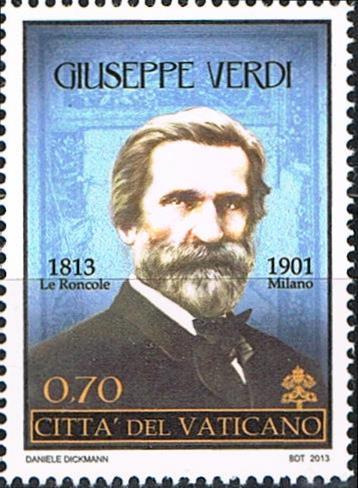

These two prolific composers of the nineteenth century, Giuseppe Verdi and Richard Wagner, are commemorated on the bicentennials of their birth. Giuseppe Verdi (1813-1901) is known for a huge army of operas, including Il Rigoletto, La Traviata, Aida, Don Carlo, and Otello. Some of his operatic melodies gained popularity through his promotion of Italian Unification. Opera attendees sang melodies on the streets, such as "Va, pensiero, sull'ali dorate," (Go, thoughts, on golden wing), from Nabucco (1841). Milton Cross writes that there are "two Verdi's", the lyricist and the dramatist. The lyricist Verdi (his earlier years) "...could shake arias and ensemble numbers that were incomparable for melodic variety." (e.g., Nabucco, Rigoletto, Macbeth). The later Verdi "...was the supreme dramatist, whose music was the servant of the play, the music and the play being inextricable pans of the artistic whole" (e.g., Otello, Aida, Falstaff). Verdi's Requiem (1871) is a non-operatic work that is often performed. It was written to honor Alessandro Manzoni (1785-1873) author of the novel I Promessi Sposi (The Bethrothed, 1827). The novel's patriotic message served as a symbol of the Risorgimento. 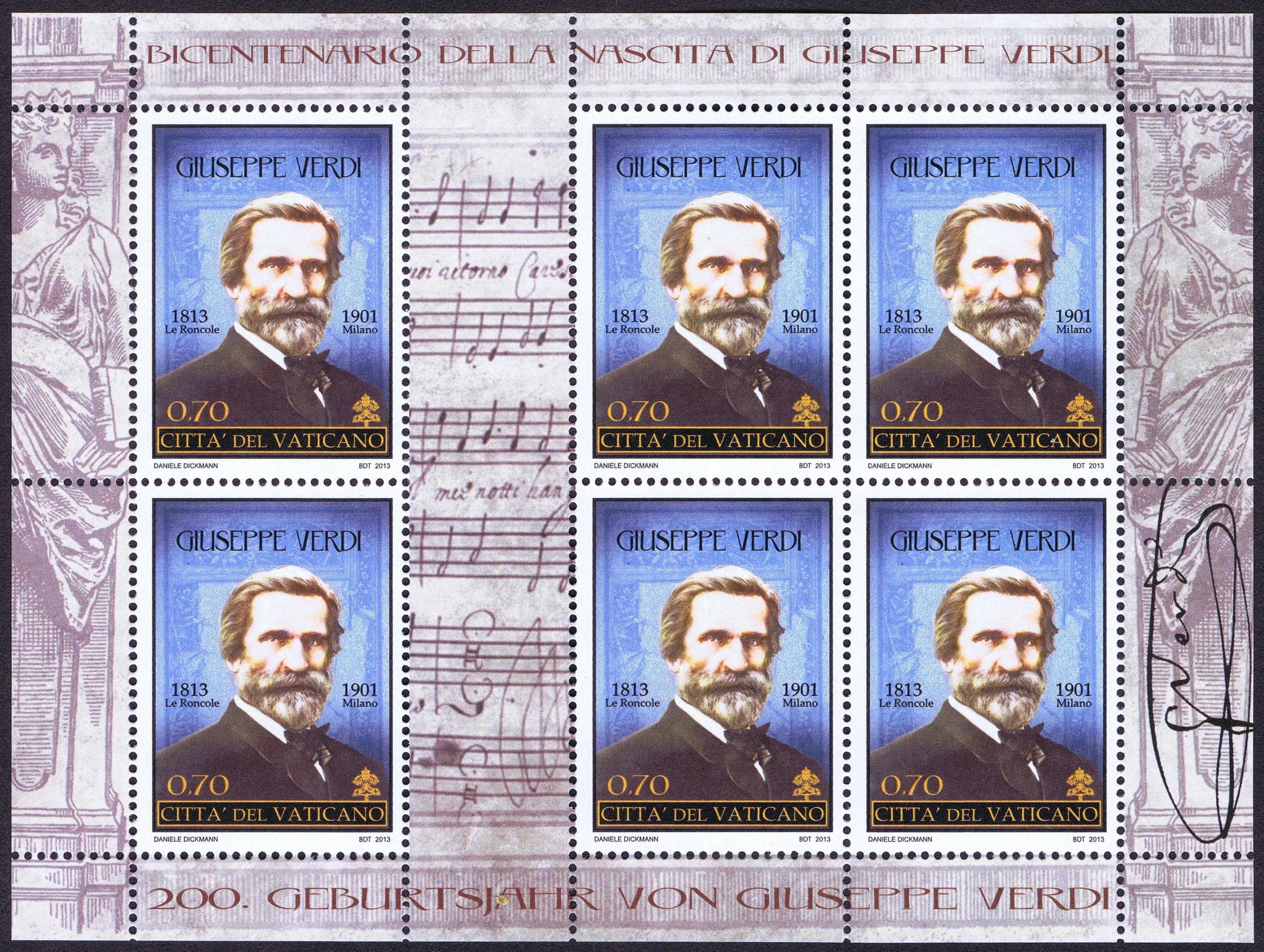

Richard Wagner (1813-1883) is recognized for his music dramas such as the Ring Cycle, and other operas such as Parsifal, Tannhauser, and Tristan and Isolde, among other works. Musicologist Milton Cross observes, "Singlehanded, Wagner changed the destiny of opera. ...Wagner's ideal was a synthesis of the arts into a superart, the perfect marriage of musk, poetry, drama, scenery, and acting. ...He happened to be one of the greatest musicians who ever lived. ...Wagner was the last of the Romantics, bringing romanticism to its final flowering." Wagner is known for his use of leitmotifs, musical phrases associated with people, places, or ideas in the opera's story. Leitmotif may be translated as "leading or guiding motif." He used this technique (a reoccurring musical phrase) many times, as for example, in the four operas comprising Der Ring Des Nibelungers. The score was complete by 1872 and was first performed at the Festpielhaus at Bayreuth in August 1876. A lietmotif can be a note, a series of notes, a chord or chord progression, or a melody that identifies the character without the use of words. A Vatican stamp was issued to commemorate each composer, the €0,70 Giuseppe Verdi and the €0,85 Richard Wagner. A miniature sheet of 6 was issued, each with their portraits and some of their music. A compact disc with a selection of Verdi's and Wagner's works was also available. References: • Milton Cross, The New Complete Stories of the Great Operas (Garden City: 1955). • Encyclopedia of the Great Composers and their Music, Volume I (Garden City: 1962). Richard Wagner references are found in Volume II, pp. 859-861. Giuseppe Verdi references are located on pp. 829-830. Technical Details: Scott Catalogue - 1537 - 1538M Date Issued - 30 August 2013 Face Value - €0,70, €0,85 Perforations - 14 x 15 Printing Process - Offset Printer - BDT (Ireland) Max Printed - 600,000 |
| (Source - Vatican Notes: Volume: 61 Issue: 358 Page: 4-6) |