Home
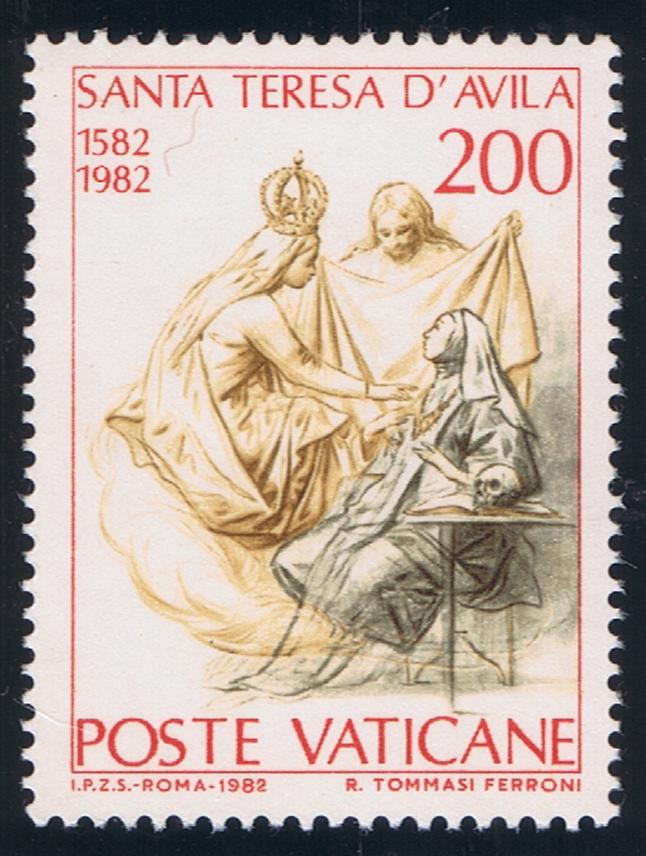
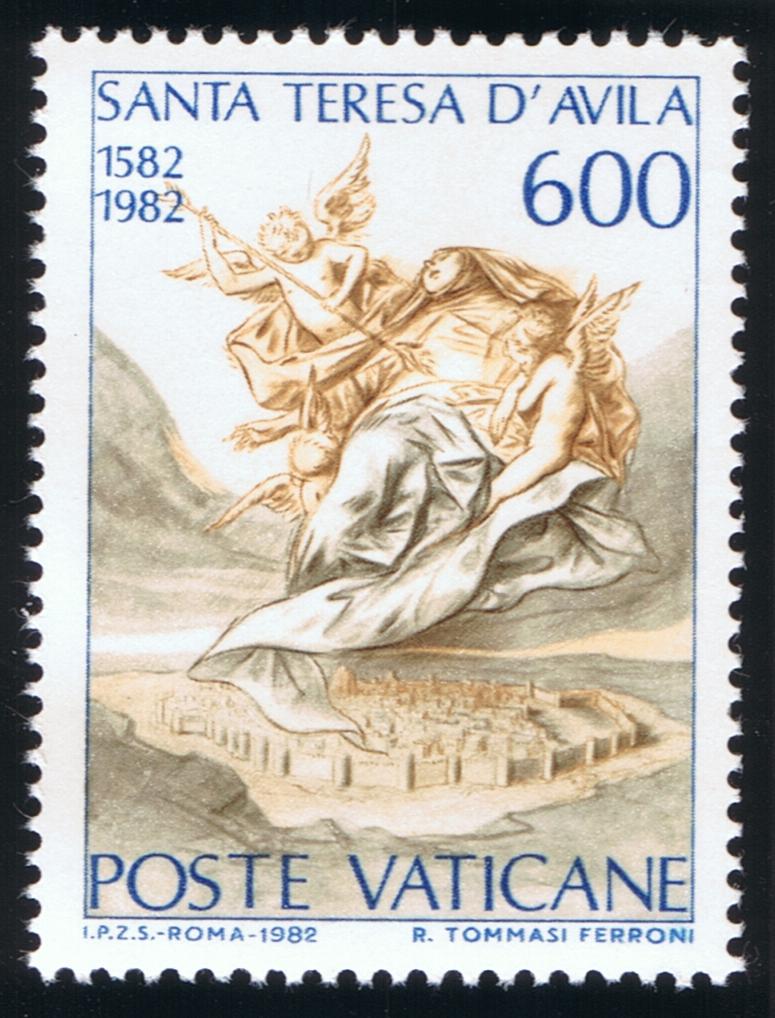
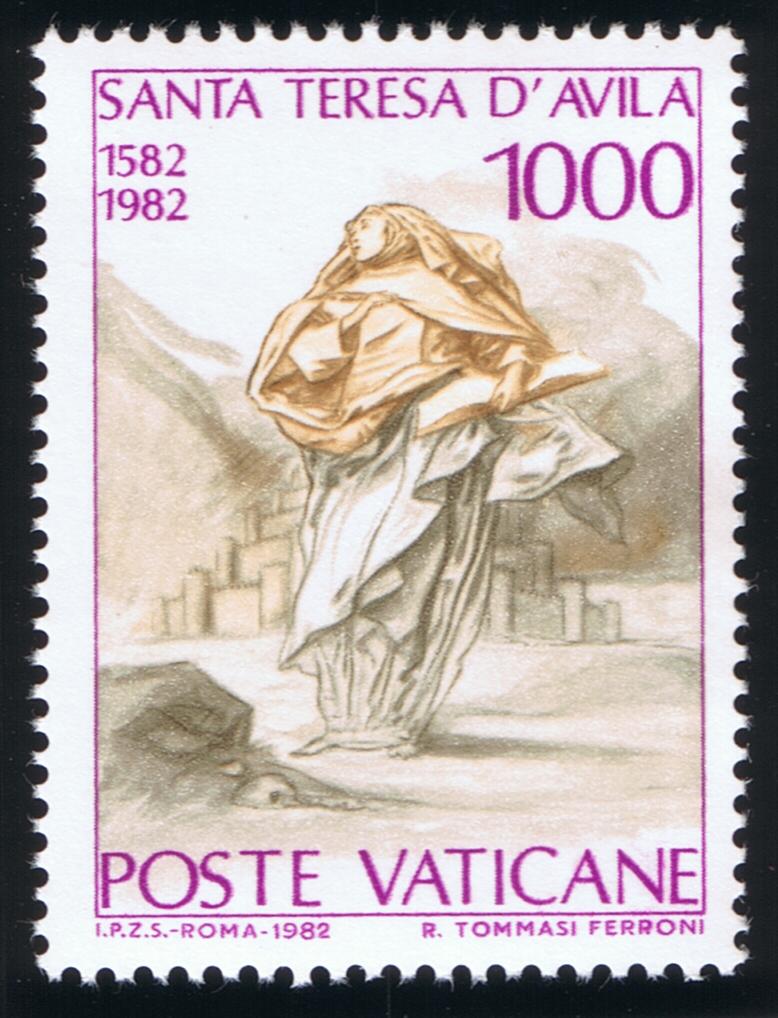 400th Anniversary of the Death of Saint Teresa of Avila Scott 710-710 (1982) Teresa of Avila (1515-1582) was a foundress of the reformed (Discalced) Carmelite Order and is also associated with St. John of the Cross (f.d., 14 December) in the reform of Carmelite friars. Theresa was born into an aristocratic family of Castile. At an early age she expressed a desire for martyrdom at the hands of Muslims as a means to realize the blessings of Heaven, then desired to join a Carmelite Order (age 20), and then experienced bouts of illness (perhaps malaria). She developed the practice of mental prayer, a life-long habit. She was influenced by the penitent examples of St. Mary Magdalene and St. Augustine. Historian David Farmer writes: “…her charm, affectionate exuberance, prudence, and charity were greatly appreciated, not the least by visitors to the convent,” (then governed by fairly relaxed rules).After 25 years as a Carmelite, she wanted to form a house where primitive Carmelite rules were observed. Although resisted by Carmelite authorities, she established the St. Joseph of Avila house in 1563, with 13 other nuns, living in conditions of poverty, hardship, and solitude, while living on manual work and alms, with a perpetual abstinence from meat. A coarse wool habit and sandals were the standard dress. Over her lifetime, 16 other houses were established, guided by her teachings and practice of prayer and contemplation. Farmer observes: “Teresa’s robust common sense, prudence, and trust in Providence allied with an extraordinary capacity for work and organization overcame all obstacles.”The Discalced Carmelites were granted recognition and independence from the Calced Carmelites. David Farmer notes: “The ideals and way of life established by her survive in the numerous small communities of Carmelite nuns who witness the importance of contemplation in the modern world, while her works are read by Christians of all denominations as well as by many who owe allegiance to none.”She composed an autobiography, as well as the books The Way of Perfection (the story of the Discalced Carmelite foundation), and The Interior Castle (about prayer and contemplation). Historian Dawn Beutner explains that Teresa experienced several spiritual gifts – she felt God had spoken to her directly to ‘converse with angels,’ she experienced a spiritual espousal and mystical marriage to Christ, and had a vision of her heart being pierced by an arrow. She died on 4 October 1582, was canonized in 1622, and declared a Doctor of the Church in 1970. She is buried at Alba de Tormes near Salamanca, Spain. She died on her way back to Avila after establishing a foundation at Burgos. Her feast day is on 15 October because on the day after her death, the Gregorian Calendar was issued which removed ten days from the month of October. St. Teresa’s symbol is a fiery arrow or a dove above her head, with the most recognizable artistic representation is a sculpture by Bernini which is also reproduced on a Vatican City stamp, St. Teresa in Ecstasy. References: |