Home


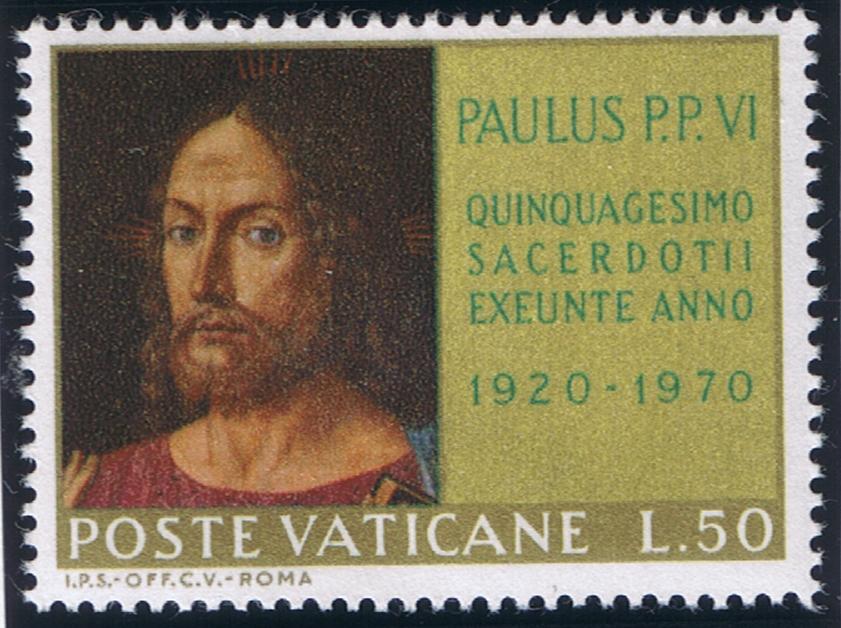 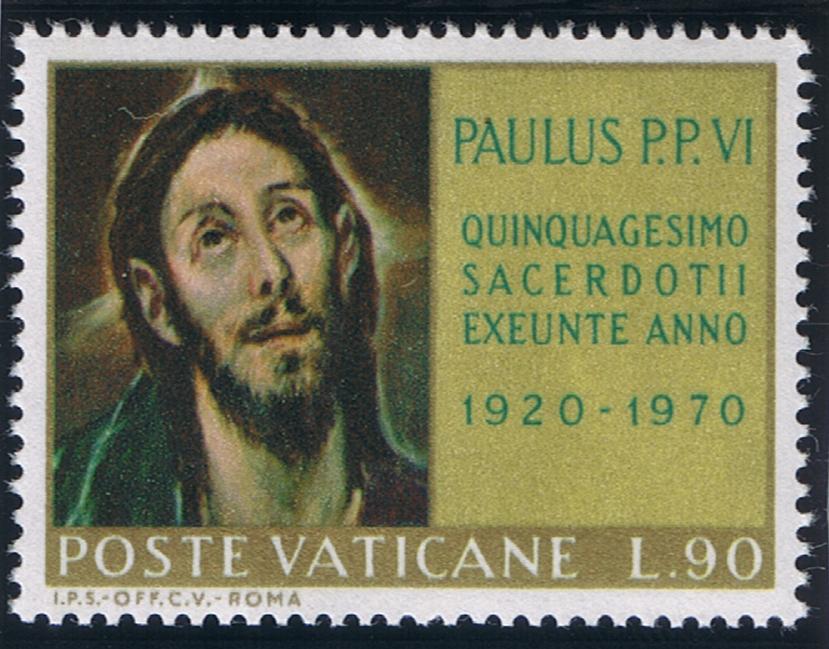
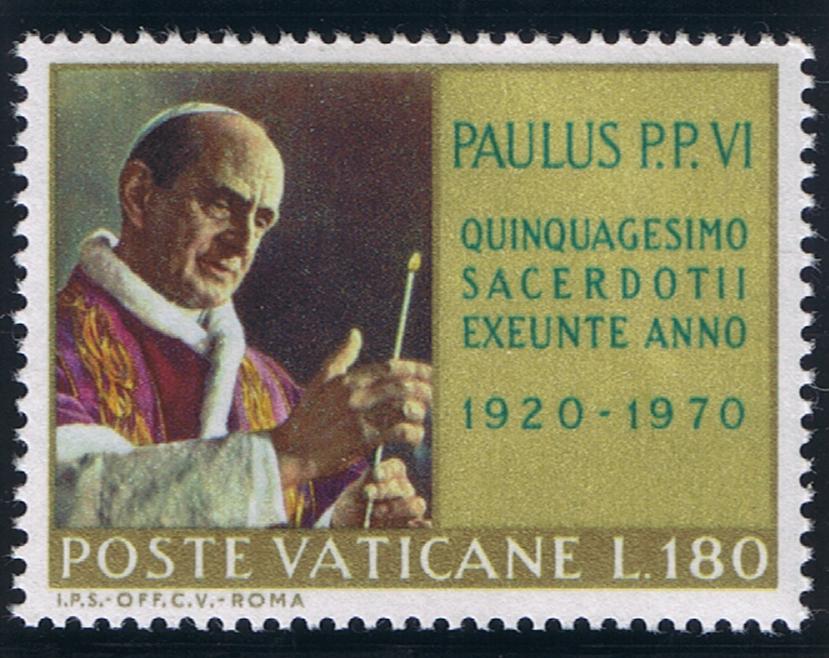 Ordination of Pope Paul VI 50th Anniversary Scott 487-491 (1970) May 29 marks the Feast of Pope Saint Paul VI. Unlike many of the saints, whose feast days are celebrated on their dates of death, for Pope Saint Paul VI the date coincides with the anniversary of his ordination in 1920. The five-stamp set above was issued in 1970 on the fiftieth anniversary of that event. Giovanni Battista Enrico Antonio Maria Montini was born at Concesio (near Brescia), Italy, on 26 September 1897. He attended the diocesan seminary and was ordained a priest on May 29, 1920. He then completed graduate studies in Rome and soon thereafter joined the Secretariat of State, serving for a brief time in the nunciature in Warsaw. In 1931 he became a domestic prelate and in 1937 an assistant to Eugenio Cardinal Pacelli, the future Pope Pius XII, who was then Secretary of State. Montini was appointed Archbishop of Milan in 1954, where he became known as ‘the worker’s archbishop’. The diocese was unruly but Montini actively pursued its restoration and visited every parish in the city, also pursuing ecumenical efforts aiming for Christian unity and understanding. 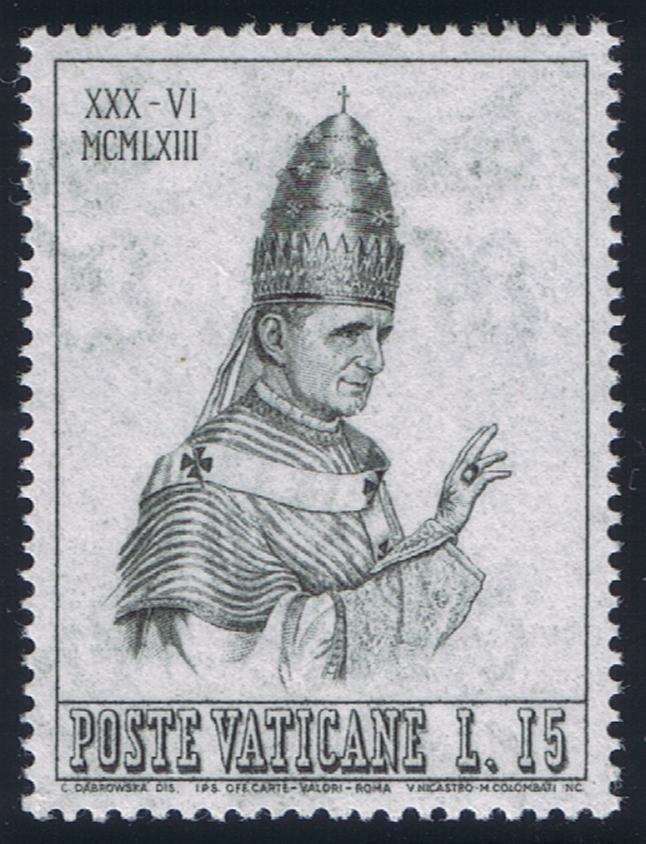
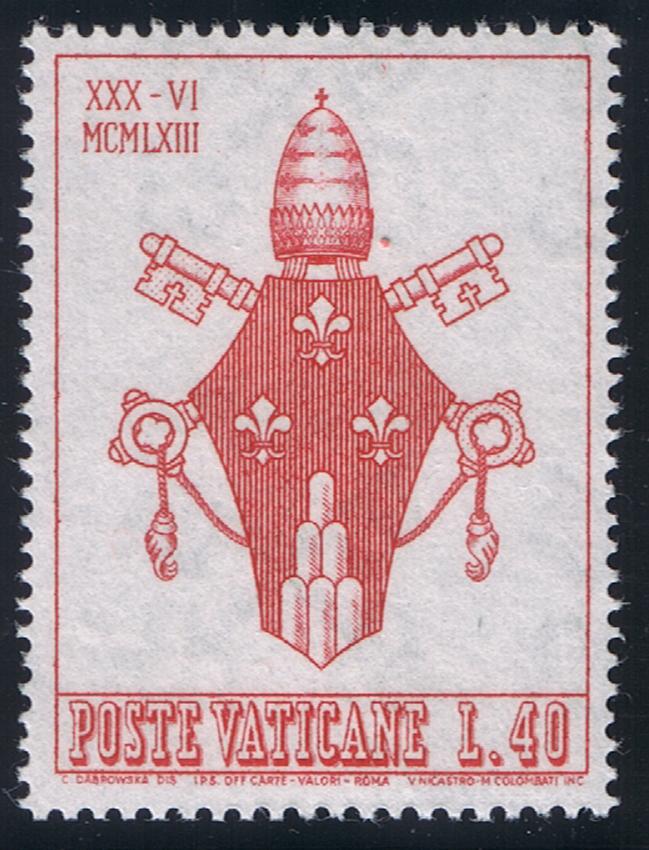
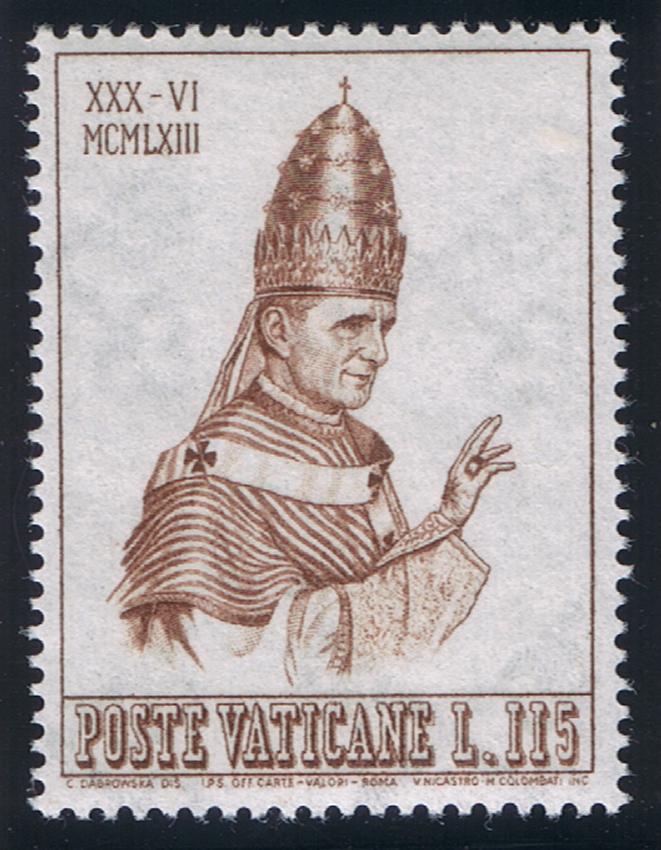
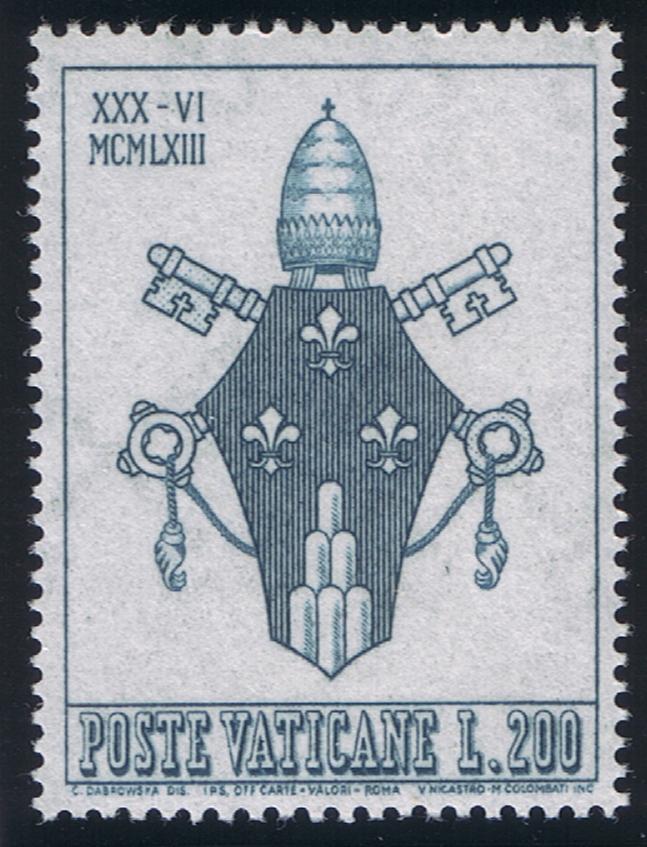 Coronation of Pope Paul VI Scott 365-368 (1963) Montini was named cardinal during Pope John XXIII’s first consistory in 1958. He would go on to be elected pope upon the death of John XXIII in June of 1963, taking the name Paul VI. His first task was to continue the Second Vatican Council, which he saw through to its conclusion in 1965, followed by a year of jubilee in 1966. 


 Closing of the Second Vatican Council Scott 441-444 (1966) Pope Paul VI earned the nickname "the Pilgrim Pope", with his first apostolic voyage being a trip to the Holy Land to meet with Patriarch Athenagoras I in Jerusalem, the first meeting of pope and patriarch since the 11th century. The visit resulted in the termination of the mutual ex-communications issued in 1054. He followed that with trips to India, the United States, Portugal, Turkey, Columbia (with a stopover in Bermuda), Geneva, Uganda, and the Far East (where an assassination attempt failed) from 1964 to 1970. 


 Papal travels of Pope Paul VI: Holy Land (Scott 375, 1964) Bombay, India (Scott 403, 1964) United Nations (Scott 416, 1965) Bogata, Columbia (Scott 461, 1968) Paul VI also saw to the implementation of the teachings of the Second Vatican Council with revision of the breviary, lectionary, order of the Mass, and other reforms. He held ecumenical gatherings with leaders of the Anglican Church and Eastern Orthodox Church. Among his encyclicals were "Mysterium fidei" (1965 reinforcing the Deposit of Faith as foundational for belief), "Populorum progressio" (1967, on social teachings), "Sacerdotlis coelibatus" (1967, reinforcing clerical celibacy), and "Humane vitae" (1968, a continuation of the traditional opposition to artificial birth control). The reaction to some of his reforms and writings as well as international terrorism led to a more withdrawn pontificate, and he undertook no foreign travel after 1970. The kidnapping and murder of childhood friend Aldo Moro, a former prime minister of Italy, in May of 1978, was another example of tragedy marking his later years as pope. Paul VI suffered from arthritis towards the end of his pontificate, and he died from a heart attack on 6 August 1978 at Castel Gandolfo. Pope Benedict XVI approved his heroic virtue in 2012, and he was canonized by Pope Francis on 14 October 2018. REFERENCES: |