Home


 Opening of the Second Vatican Ecumenical Council (Vatican II) Scott 345-352 (1962) The stamps illustrated above were issued on October 30, 1962, to mark the opening of the Second Vatican Ecumenical Council, now remembered simply as "Vatican II". The subjects for the eight stamps are: To say the impacts of Vatican II on the Catholic Church were huge would be an understatement. Vatican II was the 21st ecumenical council of the Roman Catholic Church. Pope John XXIII proposed the idea of the Council in 1959, shortly after his election as Pope, because he believed the Church was in need of “updating”. He felt a revival or modernization of Church practices was needed in order to improve the connection of the Church to the people living in the 20th-century world, one which had become increasingly secularized. He believed Church practices needed to be improved, and its teachings needed to be made more understandable and relevant to its followers. Preparations for the council took three years, starting in 1959 and culminating in the opening of the Council on October 11, 1962. Pope John XXIII oversaw the preparation for Vatican II and its first session. Following his death in June of 1963, Pope Paul VI managed the last three sessions. Vatican II closed following its fourth session on December 8, 1965. 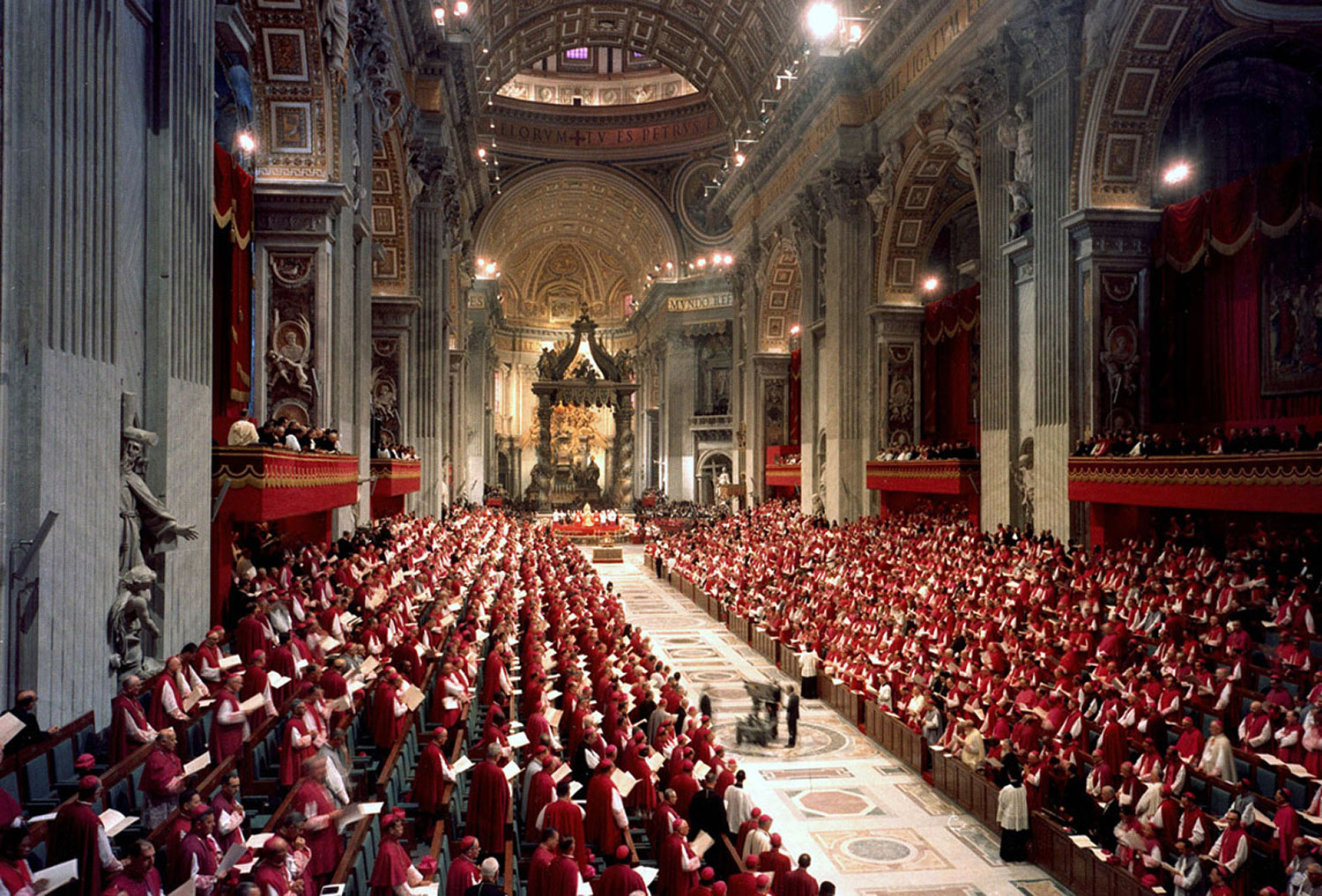 Vatican II in session, Saint Peter's Basilica, Rome Catholic Press Photo, Date Unknown From Wikimedia Commons, in the Public Domain The participants at Vatican II could be broken into two camps: reform-minded clerics and theologians agreeing with a need to institute change, and conservative members of the clergy who saw little need for change and reform. In the end, "updating" won out over "resistance to change", resulting in Vatican II producing sixteen magisterial documents (broken down into four "Constitutions", nine "Decrees" and three "Declarations") which proposed significant developments in doctrine and practice, including: This article barely scratches the surface of the impacts of Vatican II on the Church. Suffice it to say the results of Vatican II are still being debated to this day, and the ramifications of the reforms of Vatican II are still being felt by the Church as a whole. One of the references below is an article from Vatican Notes from 1963 written by Rev. Charles Von Euw. Father Von Euw served on the faculty of St. John's Seminary in Brighton, Massachusetts and specialized in Patristics (the study of the early Church Fathers). Due to his theological expertise, Richard Cardinal Cushing, the archbishop of Boston, selected Fr. Von Euw to accompany him to Rome for the Second Vatican Council, where he served as the Cardinal's official theologian or "peritus" ("expert"). He attended all the deliberations of the first session of Vatican II in 1962, and his article ties the stamps presented in this Email to the "circumstances and significance" of this first session of the Council. It is a fascinating, first-hand look back at this historic event. Father Von Euw went on to attend all subsequent sessions of Vatican II through 1965. Fr. Von Euw passed away unexpectedly in 1969 at the young age of 46. REFERENCES: |