Home
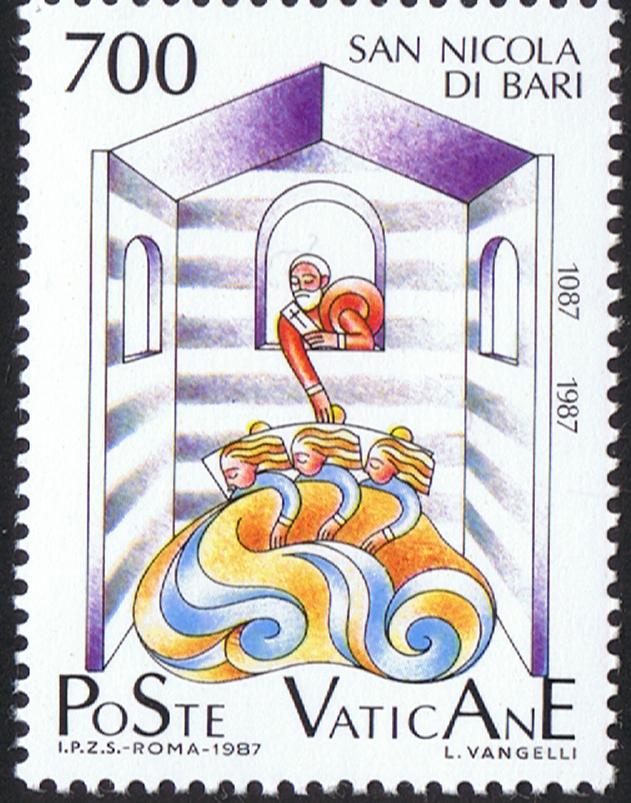
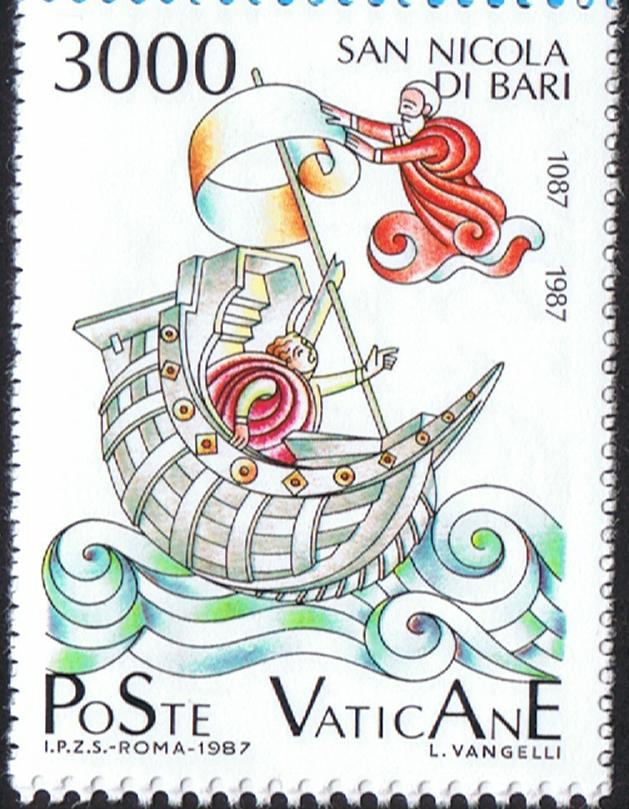
Nicholas was a 4th century bishop of Myra (Lycia in southwestern Turkey, now known as Mugla). A Nicholas cult was established in the 6th century and spread to the West in the 10th century. When Muslims took over Turkey, Nicholas’ relics were transferred to Bari, on Italy’s Adriatic coast (1087), a city in which there was a large Greek immigrant community. The Basilica of St. Nicola di Bari was built 1087-1197 to house the relics and it was a center for pilgrimage of both Greek and Latin Christians then and later. Many churches were named for St. Nicholas as are numerous artistic depictions. David Farmer suggests that San Nicola was “the most frequently represented saintly bishop for several centuries.” St Nicholas is the patron of many causes – children, sailors, unmarried girls, merchants, pawnbrokers, apothecaries, perfumers. His most popular representation is that of Santa Claus – the giving of gifts to children – known as Father Christmas or the Dutch Sinte Klaas. Historian Donald Attwater observes that while Nicholas “…is the patron of countries provinces, dioceses and cities, titular of churches innumerable.., and represented countless times in paintings and carvings. Yet what can be confidently stated of his personal history is no more than that he was a bishop of Myra….” His emblem is three balls – representing the bag of gold he presented to unmarried girls as a dowry to prevent them from a life of prostitution. The same symbol is used for pawnbrokers. St. Nicholas has been commemorated by Vatican City philately in a 1988 set of three stamps marking the 900th anniversary of the translation of his relics to Bari and by a fresco at the Cathedral of Nardo (Italy) issued in 2013. References: • David Farmer, Oxford History of Saints • Donald Attwater and Catherine Rachel John, Penguin Dictionary of Saints • You Tube, "Several You-Tube Videos of St Nicholas Tomb Are Available On Line" Article Links: • Thomas I Crimando,“Relics of St. Nicholas,” : Vatican Notes, Vol. 36, No. 5 p. 8-9 (1988) • James C. Hamilton,“New Issues: November-December 2013” : Vatican Notes, Vol. 62, No. 359 p. 4-6 (2013) | |||||||||