Home
Starting in 1998 and running for three years, Vatican City issued three sets of stamps entitled “Popes of the Holy Years”. These stamps were issued as a lead-up to the Holy Year of 2000, and provide images for twenty-five popes from the year 1300 through 2000. Today's excerpt will look at the first set of stamps issued, in 1998, which portrayed the popes from the year 1300 through 1525. Some of these popes had other stamps upon which they appeared, and those stamps are included. Boniface VIII: remembered as the pope who instituted the practice of celebrating Holy Years (or Jubilee Years), starting in 1300. The practice comes from ancient Jewish tradition of the jubilee year as a time of joy and the remission or universal pardon from sins (as found in Leviticus 25:10), once every 50 years. Boniface VIII served as pope from 1294 (succeeding Pope Celestine V, who had resigned) to 1303. In addition to the "Popes of the Holy Years" stamp and label, issued in 1998, Boniface VIII appears on two stamps from the 1950 Holy Year issue, commemorating his proclamation of the first Holy Year in 1300: 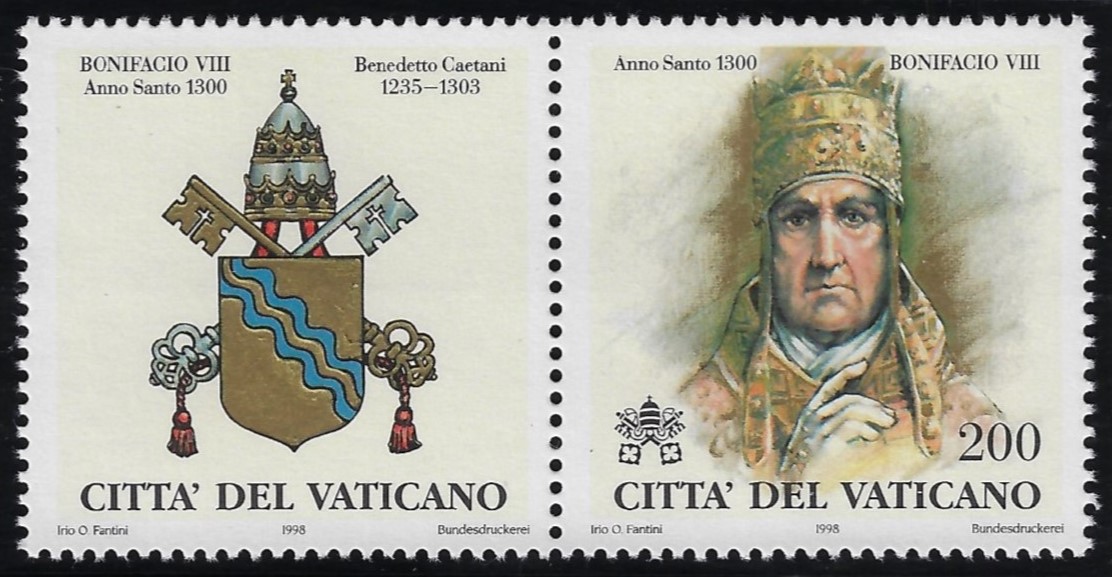 Pope Boniface VIII: Popes and the Holy Years Issue Scott 1065 (1998) 
 Pope Boniface VIII: Holy Year of 1950 Issue Scott 134 and 138 (1949) Clement VI: pope from 1342 to 1352, he oversaw the Holy Year of 1350. He was the fourth of the seven “Avignon Popes” who resided in France rather than Rome during the 14th and 15th centuries, making the 1350 Jubilee Year a bit awkward:  Pope Clement VI: Popes and the Holy Years Issue Scott 1066 (1998) Boniface IX: serving as pope from 1389 to 1404, he was the second pope to reside in Rome following the end of the Avignon papacies and was the second pope following the Western Schism of 1378. He had the unique situation of presiding over two Holy Years: one in 1390 (declared by his predecessor, Urban IV) and a second in 1400:  Pope Boniface IX: Popes and the Holy Years Issue Scott 1067 (1998) Martin V: serving as pope from 1417 to 1431, the election ended the Western Schism of 1378–1417, a split between factions in the Catholic Church that had resulted in series of “anti-popes” claiming power over the Church. Martin V oversaw the Holy Year of 1423. In addtion to the "Popes and the Holy Years" stamp and label, Martin V was honored on the aerogramme issued in 2017, commemorating the 600th anniversary of his election as pope:  Pope Martin V: Popes and the Holy Years Issue Scott 1068 (1998)  Pope Martin V: 600th Anniversary of Election as Pope Aerogramme (2017) Nicholas V: Nicholas V proclaimed the Holy Year of 1450, which served to set the interval between ordinary Holy Years at 25 years. Described as one of the “Renaissance Popes”, he began the process of making Rome the center of the arts and literature, which continued for the next two centuries. His papacy ran from 1447 to 1455. In addition to the "Popes and the Holy Years" stamp and label, the 5th centenary of the death of Pope Nicholas V was remembered in a three-stamp set issued by Vatican City in 1955: 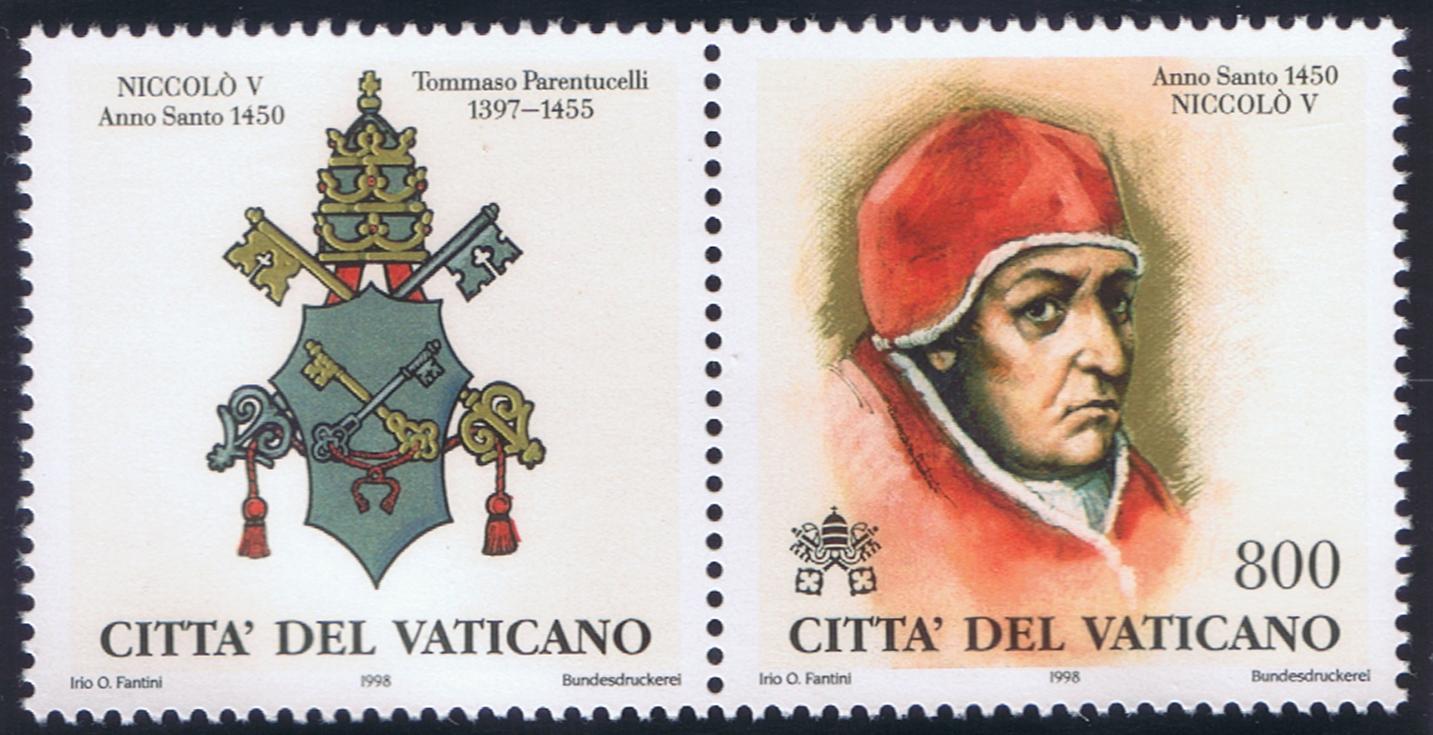 Pope Nicholas V: Popes and the Holy Years Issue Scott 1069 (1998) 

 Pope Nicholas V: 500th Anniversary of Death Scott 197-199 (1955) Sixtus IV: serving as pope from 1471 to 1484, Sixtus IV proclaimed the Holy Year of 1475. In addition, he created the Vatican Library and commissioned the construction of the Sistine Chapel, which bears his name. He continued the movement to bring the great artists of the early Renaissance to Rome. In addition to the "Popes and the Holy Years" stamp and label, Sixtus IV is honored on a three-stamp set issued by Vatican City in 1975 commemorating the 500th anniversary of the founding of the Vatican Apostolic Library:  Pope Sixtus IV: Popes and the Holy Years Issue Scott 1070 (1998) 

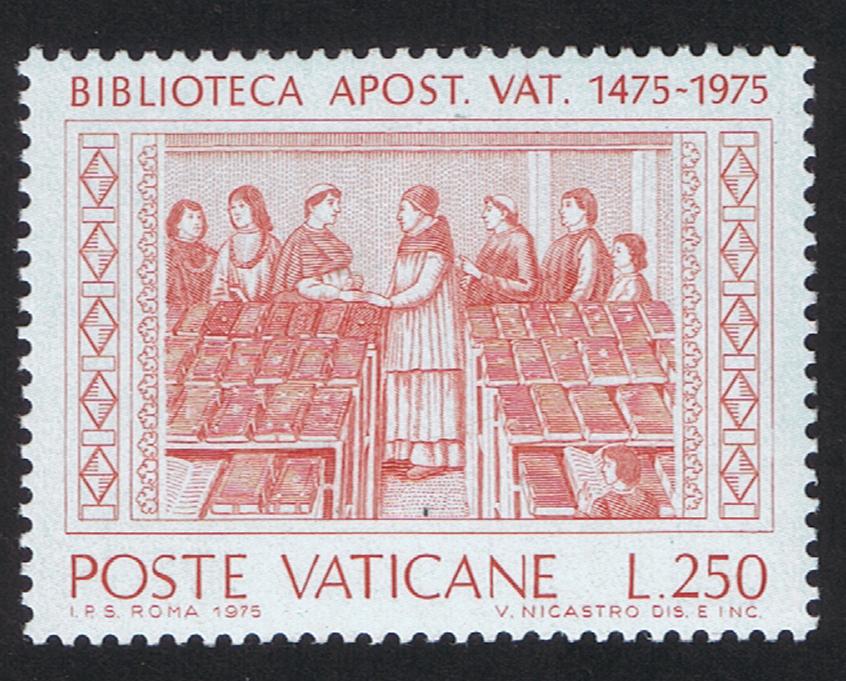 Pope Sixtus IV: 500th Anniversary of Founding of the Vatican Apostolic Library Scott 582-584 (1975) Alexander VI: the pope for the Holy Year of 1500, Alexander VI served from 1493 to 1503. Among his edicts were rulings confirming the rights of the Spanish in the New World following the voyage of Christopher Columbus in 1492. A member of the powerful Borgia family, his history is checkered with controversy:  Pope Sixtus IV: Popes and the Holy Years Issue Scott 1071 (1998) Clement VII: a member of the powerful Medici family, Clement VII was pope from 1523 to 1534. He has been called "the most unfortunate of the popes" since a period of political, military, and religious turmoil occurred during his papacy. He served as pope for the Holy Year of 1525:  Pope Clement VII: Popes and the Holy Years Issue Scott 1072 (1998) |