Home
The popes presented in today's excerpt were depicted in the second of three Vatican City stamps sets entitled "Popes of the Holy Years". This set was released in 1999 as the Holy Year of 2000 approached. The eight popes presented presided over the Holy Years of 1550 through 1725. Julius III: serving as pope from 1550 to 1555, Pope Julius III was pope for the Holy Year of 1550. His papacy is remembered as one of inaction, devotion to personal pleasure, and scandal, which harmed both his reputation, and that of the Catholic Church: 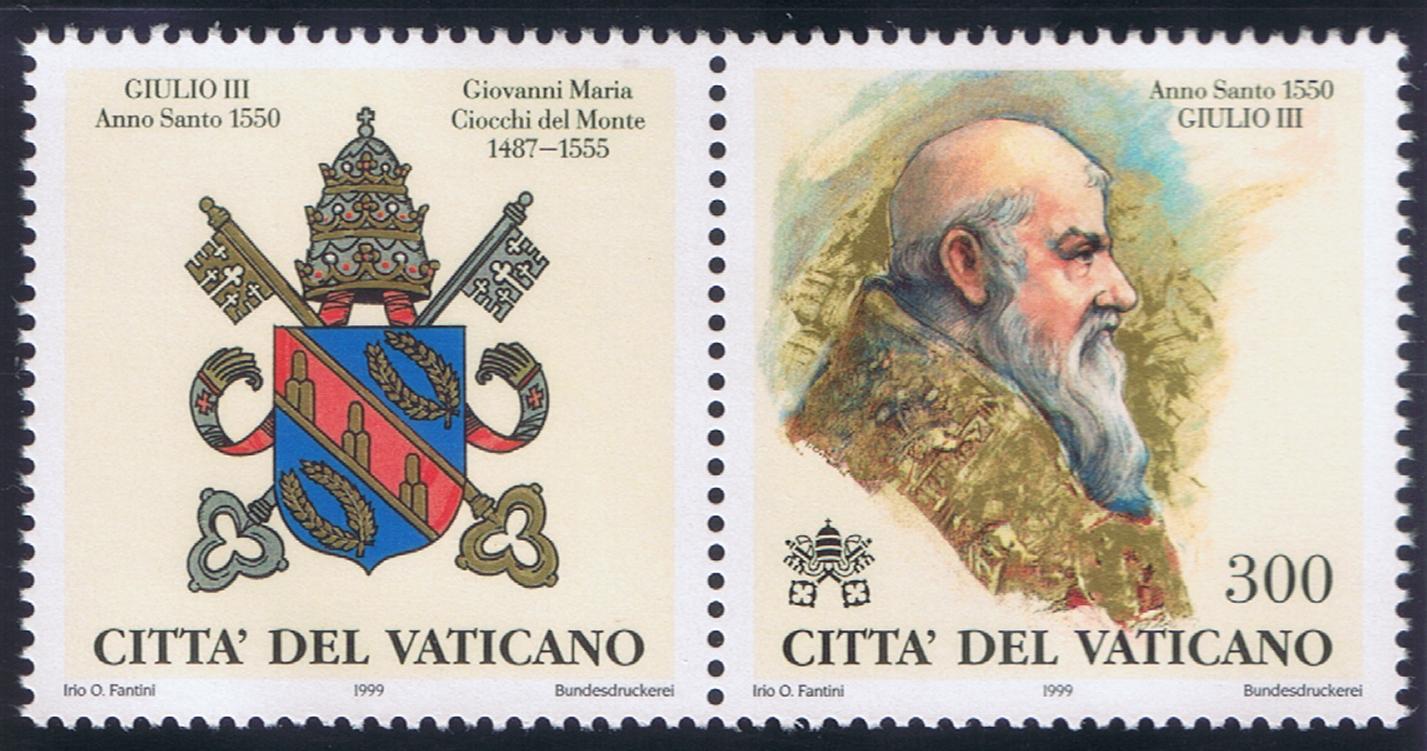 Pope Julius III: Popes and the Holy Years Issue Scott 1095 (1999) Gregory XIII: the pope for the Holy Year of 1575, Pope Gregory XIII’s papacy spanned the years 1572 to 1585. His singular accomplishment is the commissioning of the modification of the Julian calendar to the Gregorian calendar, which bears his name and is the internationally accepted calendar to this day. In addition to the stamp and label issued as part of the "Popes of the Holy Years" set, Gregory XIII is honored as part of a three stamp set and souvenir sheet issued for the 400th anniversary of the Gregorian Calendar in1982:  Pope Gregory XIII: Popes and the Holy Years Issue Scott 1096 (1999) 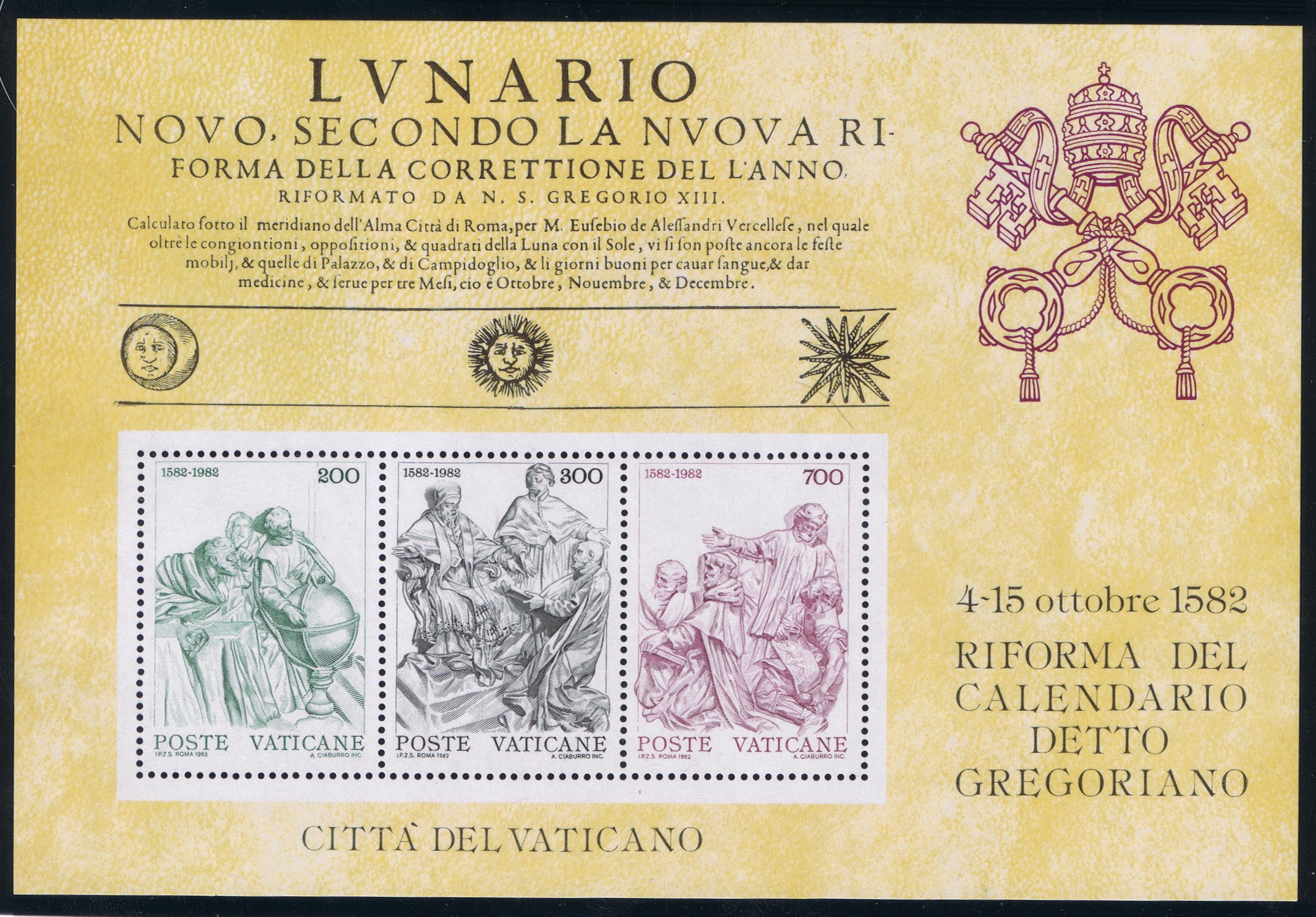 Pope Gregory XIII: 400th Anniversary of the Gregorian Calendar Scott 717a (1982) Clement VIII: pontiff from 1592 to 1605, Clement VIII presided over the Holy Year of 1600. During his papacy he helped reconcile King Henry IV of France to the Catholic faith and brokered the end of the dispute between the Dominican and Jesuit orders: 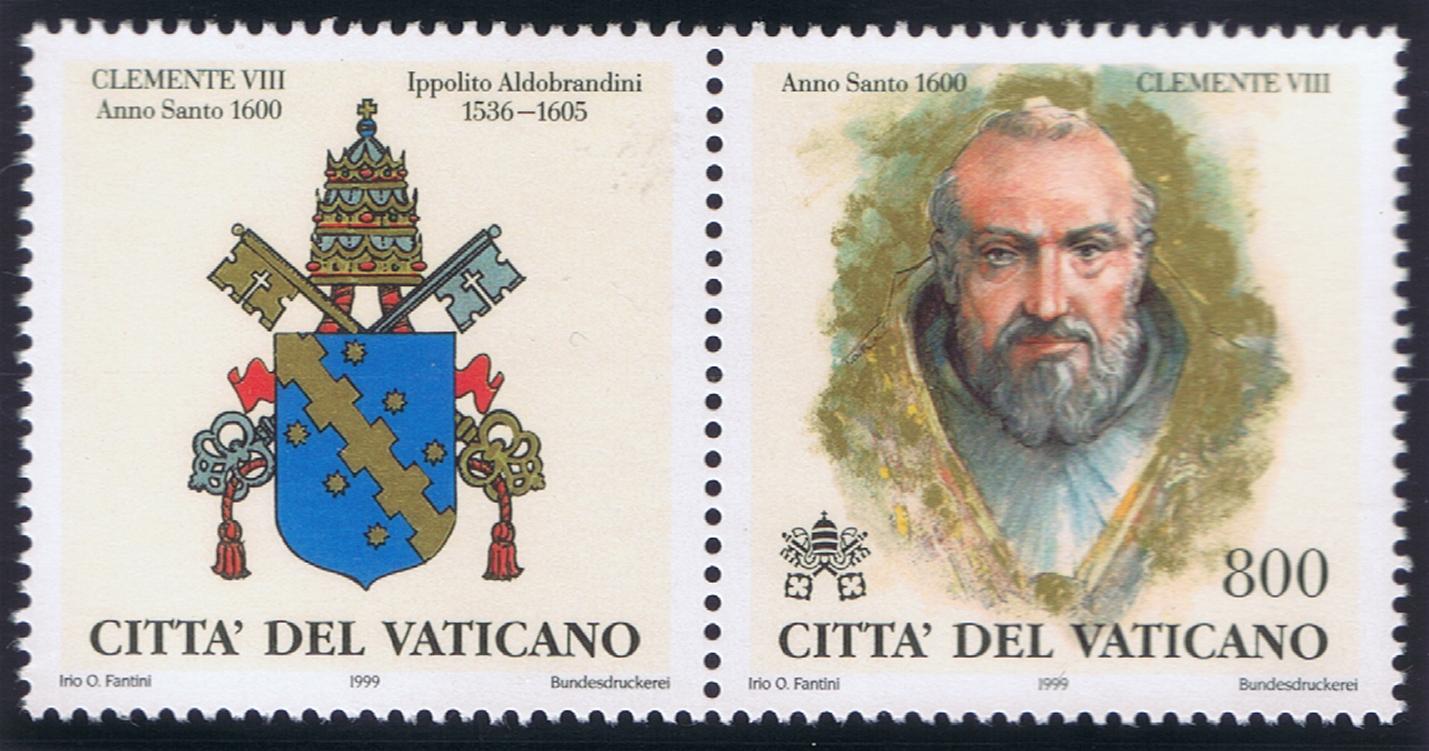 Clement VIII: Popes and the Holy Years Issue Scott 1097 (1999) Urban VIII: as pope from 1623 to 1644, Urban VIII expanded the papal territory by force of arms and skillful politicking. He was a prominent patron of the arts who commissioned artists like Bernini, who completed spectacular projects at Saint Peter’s Basilica. He served as pope for the Holy Year of 1625. In addition to the stamp and label issued as part of the "Popes of the Holy Years" set, he is presented on a stamp from the "Popes of Saint Peter's Basilica" series from 1953, which will be reviewed in a separate article.  Pope Urban VIII: Popes and the Holy Years Issue Scott 1098 (1999) Innocent X: serving as pope from 1644 to 1655, Innocent X has been characterized as “one of the most politically shrewd pontiffs”, and he greatly increased the temporal power of the Holy See during his reign. The Holy Year of 1650 took place during his papacy:  Pope Innocent X: Popes and the Holy Years Issue Scott 1099 (1999) Clement X: the Holy Year of 1675 was proclaimed by Pope Clement X, who served as the Bishop of Rome from 1670 to 1679. Elected pope at age 79, he remains ranked as the oldest pope at the time of his election: 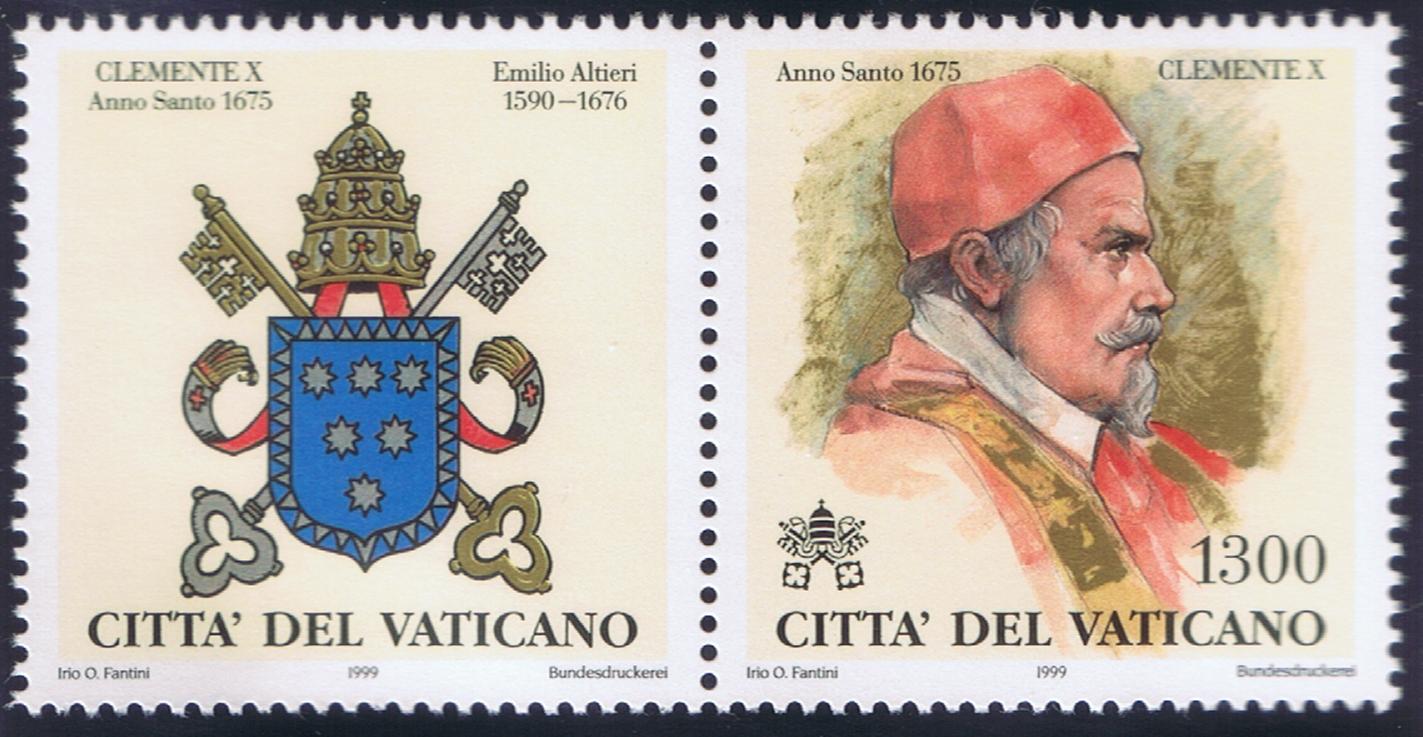 Pope Clement X: Popes and the Holy Years Issue Scott 1100 (1999) Innocent XII: serving as pope from 1691 to 1700, Pope Innocent XII opened the Holy Year of 1700 but died in July, months before its closing. He worked to suppress nepotism within the Roman Curia, issuing a papal bull forbidding it and limited the transfer of Church revenue and land to relatives. In addition to the stamp and label issued as part of the "Popes of the Holy Years" set, Innocent XII is depicted on a stamp from 2015 issued to commemorate the 400th anniversary of his birth: 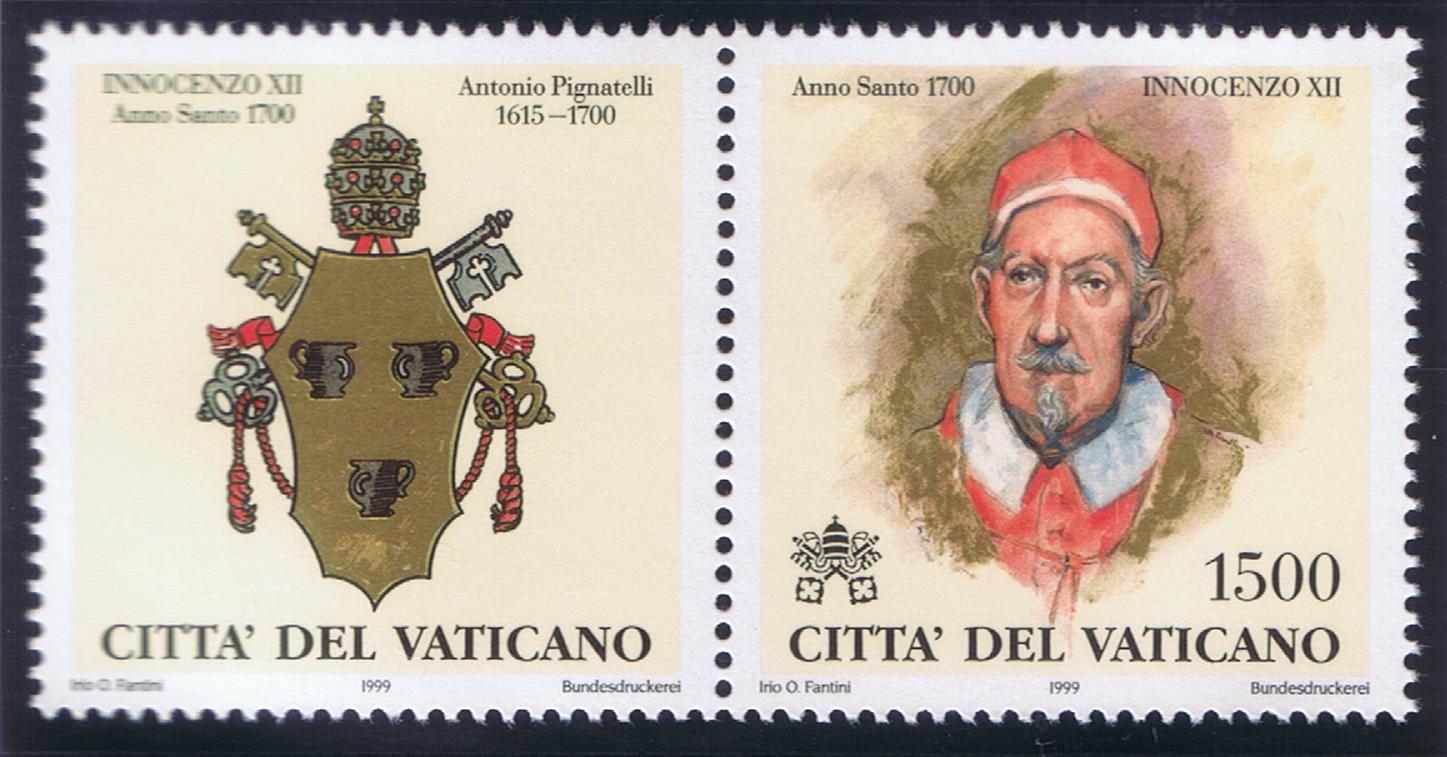 Pope Innocent XII: Popes and the Holy Years Issue Scott 1101 (1999)  Pope Innocent XII: 400th Anniversary of Birth Scott 1604 (2015) Benedict XIII: serving as pope from 1724 to 1730, Benedict XIII is remembered as a pontiff who focused on his religious responsibilities and lacked organizational skills, which resulted in financial abuses by his administrators, causing great damage to the Church in Rome. He officiated at the Holy Year of 1725.  Pope Benedict XIII: Popes and the Holy Years Issue Scott 1102 (1999) |